Easy Fluffy Homemade Pancakes
There’s a reason homemade pancakes remain one of the most-requested breakfasts in kitchens everywhere: when the batter is mixed correctly, they turn out light, fluffy, and golden every time. This recipe uses simple pantry staples and a straightforward mixing method that avoids the most common pancake pitfalls — dense centers, flat pancakes, and uneven browning. Whether you’re new to cooking or just want a dependable go-to recipe, this guide walks you through exactly how to make fluffy homemade pancakes from scratch, step by step.
Why You’ll Love These Pancakes
- Simple ingredients — everything you need is likely already in your kitchen.
- Consistently fluffy texture — the leavening ratio and gentle mixing method are designed to trap air without overworking the batter.
- Quick to make — from bowl to plate in about 25 minutes.
- Beginner-friendly — clear visual cues let you know exactly when to flip and when they’re done.
- Easy to customize — works well with a variety of mix-ins and substitutions.
- Great for batch cooking — freezes and reheats well for busy mornings.
Ingredients
- 2 cups (250 g) all-purpose flour
- 2 tablespoons (25 g) granulated sugar
- 1 tablespoon baking powder
- ½ teaspoon baking soda
- ½ teaspoon salt
- 2 large eggs
- 1¾ cups (420 ml) milk
- ¼ cup (60 g) unsalted butter, melted, plus extra for cooking
- 1 teaspoon vanilla extract
This makes about 12 medium pancakes (roughly 4-inch/10 cm each), enough for 4 servings.
Equipment
- Large mixing bowl
- Medium mixing bowl
- Whisk
- Measuring cups and spoons
- Non-stick skillet or griddle
- Spatula
- Ladle or ¼-cup measuring cup (for portioning batter)
How to Make Fluffy Homemade Pancakes
- Mix the dry ingredients. In a large bowl, whisk together the flour, sugar, baking powder, baking soda, and salt until evenly combined. This takes about 30 seconds and ensures the leavening agents are distributed evenly, which helps the pancakes rise consistently.
- Mix the wet ingredients. In a separate medium bowl, whisk the eggs until smooth, then whisk in the milk, melted butter, and vanilla extract. The mixture should look pale yellow and fully combined, with no streaks of egg.
- Combine wet and dry ingredients. Pour the wet mixture into the bowl of dry ingredients. Using a whisk or spatula, stir gently just until the flour disappears — about 10 to 15 strokes. The batter should look slightly lumpy and thick, similar to a thick cream consistency. Small lumps are fine and expected; do not stir until smooth, as this overworks the gluten and results in denser pancakes.
- Let the batter rest. Let the batter sit for 5 minutes at room temperature. This allows the baking powder to begin activating and gives the flour time to hydrate, which improves the final texture.
- Heat the pan. Place a non-stick skillet or griddle over medium-low heat. Add a small amount of butter and let it melt, tilting the pan to coat the surface evenly. The pan is ready when a drop of water sizzles gently on contact — not violently, which would indicate the pan is too hot.
- Pour the batter. Using a ¼-cup measure or ladle, pour batter onto the skillet, leaving space between each pancake so they don’t merge. Cook for about 2 to 3 minutes on the first side.
- Watch for bubbles. The pancake is ready to flip when small bubbles form across the surface and begin to pop, and the edges look set and slightly matte rather than glossy. This is the clearest visual sign that the underside is fully cooked.
- Flip and finish cooking. Flip the pancake in one smooth motion and cook for another 1 to 2 minutes, until the second side is golden brown and the pancake springs back lightly when pressed in the center.
- Keep warm and repeat. Transfer cooked pancakes to a plate and, if needed, keep them warm in a low oven (around 200°F/95°C) while you cook the rest of the batter. Add a little more butter to the pan between batches as needed.
Tips for Fluffy Pancakes
- Mix gently and briefly. Overmixing develops gluten, which makes pancakes tough and chewy instead of light and airy. Stop stirring as soon as the flour is incorporated.
- Watch the batter consistency. The batter should be thick enough to hold its shape when dropped from a spoon but still pourable. If it’s too thick, add a tablespoon of milk at a time; if too thin, add a tablespoon of flour.
- Keep the heat moderate. Medium-low heat allows the inside to cook through before the outside over-browns. High heat browns the surface too quickly while leaving the center undercooked.
- Flip only once. Repeatedly flipping deflates the air bubbles that create fluffiness. Wait for the bubble cue described above before flipping.
- Avoid overcooking. Once both sides are golden and the pancake springs back when touched, it’s done. Leaving it on the heat longer dries it out.
- Fresh baking powder matters. Baking powder loses potency over time, which directly affects how well pancakes rise. If your pancakes seem flat despite following the recipe, check the expiration date.
Common Mistakes
- Overmixing the batter. This is the most common cause of dense pancakes. Mix only until the dry streaks disappear.
- Using a pan that’s too hot. This causes dark, burnt spots on the outside while the inside stays raw. Stick to medium-low heat and adjust as needed.
- Flipping too early. Flipping before bubbles form and the edges set often causes the pancake to tear or cook unevenly.
- Skipping the batter rest. Cooking the batter immediately can result in slightly flatter pancakes, since the leavening hasn’t had time to start working.
- Not measuring flour correctly. Scooping flour directly with a measuring cup packs it down and adds too much, leading to dry, dense pancakes. Spoon flour into the cup and level it off instead.
- Old or expired leavening agents. Baking powder and baking soda lose effectiveness over time, resulting in pancakes that don’t rise properly.
- Overcrowding the pan. Placing pancakes too close together makes them difficult to flip and can cause uneven cooking.
Ingredient Substitutions
- Milk alternatives: Buttermilk can replace regular milk for a slightly tangier flavor and even more tender crumb; if using buttermilk, reduce the baking powder to 2 teaspoons since buttermilk reacts with the baking soda already in the recipe. Plant-based milks such as oat, almond, or soy milk also work, though the texture may be very slightly less rich.
- Flour alternatives: A 1:1 gluten-free all-purpose flour blend can generally be substituted, though the texture may be a bit more delicate. Whole wheat flour can replace up to half the all-purpose flour for a heartier texture, but using it entirely will result in denser pancakes.
- Butter/oil alternatives: Neutral oils such as vegetable or canola oil can replace melted butter in equal amounts, though the flavor will be slightly less rich.
- Egg alternative: One egg can be replaced with ¼ cup (60 g) unsweetened applesauce or a “flax egg” (1 tablespoon ground flaxseed mixed with 3 tablespoons water, rested for 5 minutes). Note that egg substitutes may result in slightly less fluffy, more delicate pancakes since eggs contribute to structure and lift.
Pancake Variations
- Blueberry pancakes: Gently fold ¾ cup (110 g) fresh or frozen blueberries into the batter after mixing, or scatter them onto each pancake right after pouring the batter onto the skillet.
- Chocolate chip pancakes: Fold in ½ cup (85 g) mini chocolate chips after mixing the batter.
- Banana pancakes: Fold in one mashed ripe banana along with the wet ingredients, and reduce the milk slightly to about 1½ cups (360 ml) to account for the added moisture.
- Cinnamon pancakes: Add 1 teaspoon ground cinnamon and an extra tablespoon of sugar to the dry ingredients for a warm, spiced flavor.
How to Store Pancakes
- Refrigerator: Let pancakes cool completely, then store in an airtight container with parchment paper between layers to prevent sticking. They will keep in the refrigerator for up to 3 days.
- Freezer: Arrange cooled pancakes in a single layer on a baking sheet and freeze until solid, about 1 hour, then transfer to a freezer-safe bag or airtight container. They will keep in the freezer for up to 2 months.
How to Reheat Pancakes
- Microwave: Heat pancakes on a microwave-safe plate for 20 to 30 seconds per pancake, or about 45 to 60 seconds for two stacked pancakes.
- Skillet: Warm over medium-low heat for about 1 minute per side, which helps restore some crispness to the edges.
- Oven: Arrange pancakes in a single layer on a baking sheet and reheat at 350°F (175°C) for about 8 to 10 minutes, or until warmed through. This method works well for reheating larger batches at once.
Frequently Asked Questions
Why are my pancakes not fluffy? The most common causes are overmixing the batter, using old baking powder, or cooking at too high a heat. Mix just until combined, use fresh leavening agents, and cook over medium-low heat.
Can I make the batter ahead of time? The dry and wet ingredients can be prepared separately and refrigerated up to a day in advance, but it’s best to combine them just before cooking, since the baking powder starts working as soon as it’s mixed with liquid.
Can I freeze pancakes? Yes. Cool them completely, freeze in a single layer until solid, then transfer to a freezer bag. They keep well for up to 2 months.
Why shouldn’t I overmix pancake batter? Overmixing develops gluten in the flour, which makes the pancakes tough and dense instead of soft and airy. A few small lumps in the batter are normal and fine.
What heat should I use for cooking pancakes? Medium-low heat is ideal. It allows the pancake to cook through evenly without the outside browning too quickly.
Can I use buttermilk instead of regular milk? Yes, buttermilk works well and adds a slightly tangy flavor and tender texture. If using it, reduce the baking powder to 2 teaspoons since buttermilk reacts with the baking soda already in the recipe.
Why do my pancakes cook unevenly? This is usually due to uneven heat distribution in the pan or the pan being too hot in one area. Preheat the pan fully before cooking and adjust heat as needed between batches.
How do I know when to flip a pancake? Look for bubbles forming across the surface and the edges turning matte and set. This indicates the bottom is cooked and it’s ready to flip.
Serving Suggestions
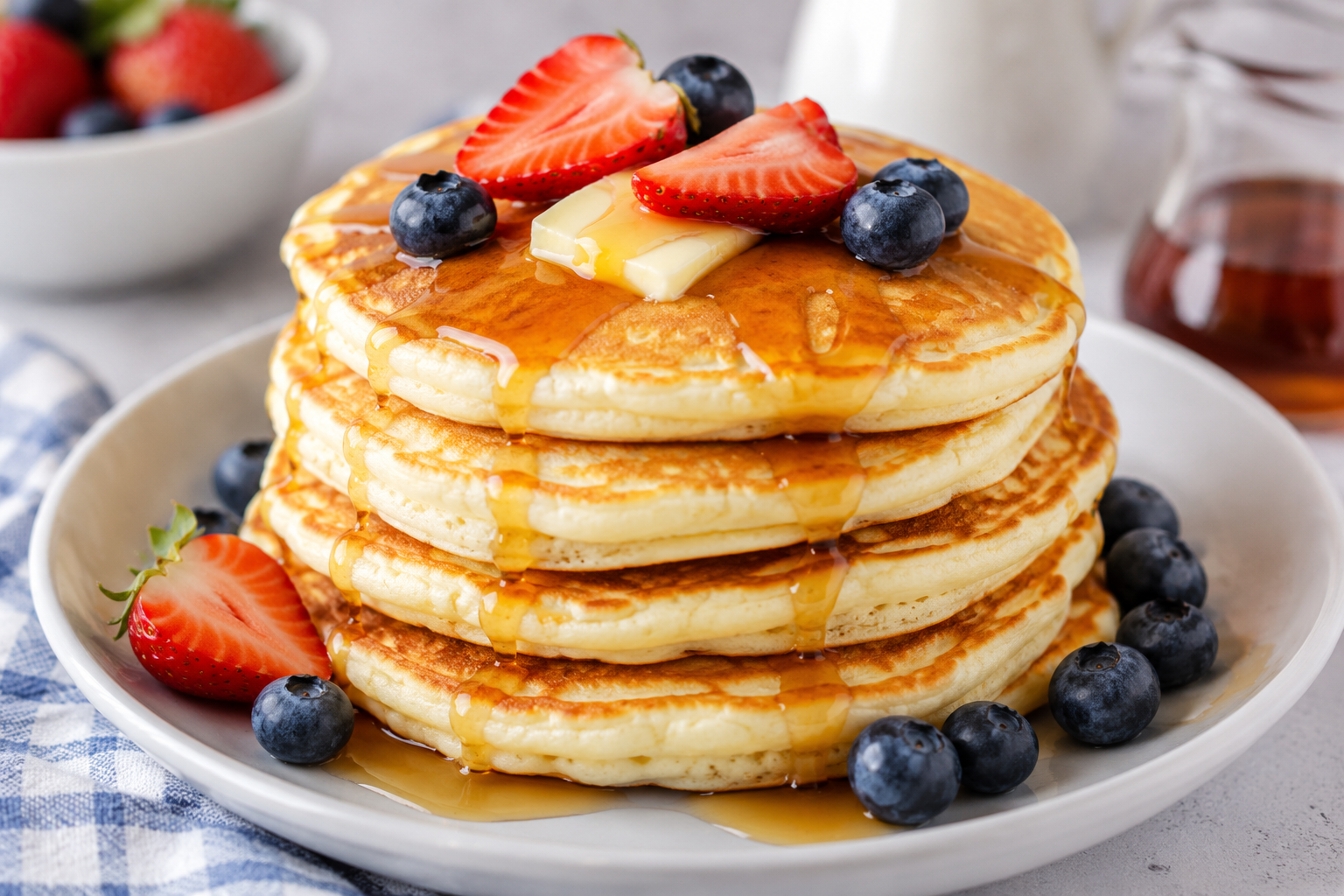
These pancakes pair well with classic toppings such as maple syrup, fresh berries, sliced bananas, or a light dusting of powdered sugar. For a heartier breakfast, serve alongside scrambled eggs, crispy bacon, or breakfast sausage. A dollop of whipped cream or a spoonful of yogurt also makes a nice addition for a weekend brunch spread.
Recipe Card
Recipe Name: Easy Fluffy Homemade Pancakes Prep Time: 10 minutes Cook Time: 15 minutes Total Time: 25 minutes Servings: 4 (about 12 medium pancakes) Cuisine: American Course: Breakfast
Ingredients:
- 2 cups (250 g) all-purpose flour
- 2 tablespoons (25 g) granulated sugar
- 1 tablespoon baking powder
- ½ teaspoon baking soda
- ½ teaspoon salt
- 2 large eggs
- 1¾ cups (420 ml) milk
- ¼ cup (60 g) unsalted butter, melted, plus extra for cooking
- 1 teaspoon vanilla extract
Instructions:
- Whisk together flour, sugar, baking powder, baking soda, and salt in a large bowl.
- In a separate bowl, whisk eggs, then add milk, melted butter, and vanilla.
- Pour wet ingredients into dry ingredients and stir gently until just combined; small lumps are fine.
- Let the batter rest for 5 minutes.
- Heat a lightly buttered non-stick skillet over medium-low heat.
- Pour ¼ cup of batter per pancake onto the skillet.
- Cook 2–3 minutes until bubbles form and edges look set, then flip.
- Cook another 1–2 minutes until golden brown and springy to the touch.
- Repeat with remaining batter, adding butter to the pan as needed.
Optional Nutrition Information (estimated per pancake, based on 12 pancakes per batch): This is an estimate calculated from the listed ingredients and will vary based on exact brands and portion sizes used.
- Calories: approximately 120
- Carbohydrates: approximately 16 g
- Protein: approximately 3 g
- Fat: approximately 5 g