
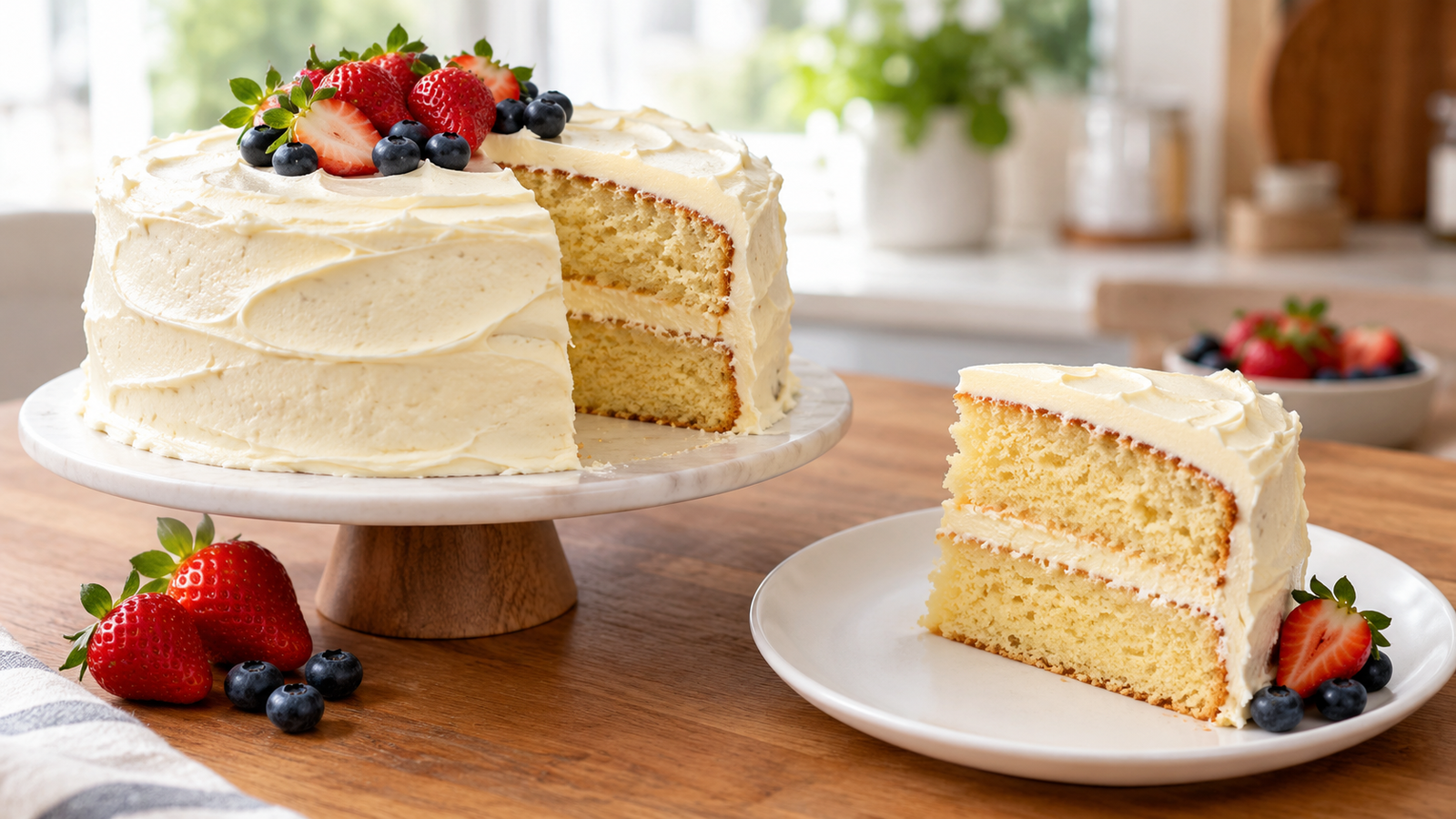
Classic Homemade Vanilla Cake
A good vanilla cake is a kitchen staple worth having on hand. This classic homemade vanilla cake bakes up soft, moist, and tender, with a delicate buttery vanilla flavor in every bite. Two golden layers are held together and covered with a simple, creamy vanilla frosting that spreads smoothly and tastes just sweet enough without overpowering the cake itself.
What makes this recipe so useful is its versatility. It works as a birthday centerpiece, a treat for afternoon tea, or a simple everyday dessert, and it serves as a reliable base for countless flavor variations. The recipe is written with beginner bakers in mind, with clear explanations for each step so the process feels approachable from the first mix to the final slice.
Recipe Overview
- Prep Time: 20 minutes
- Cook Time: 30 minutes
- Cooling Time: 30 minutes
- Total Time: 1 hour 20 minutes
- Servings: 10
- Difficulty: Easy
- Cuisine: American-inspired
- Course: Dessert
Ingredients
Vanilla Cake
- 2 cups all-purpose flour
- 2 teaspoons baking powder
- 1/2 teaspoon salt
- 1/2 cup unsalted butter, softened
- 1 cup granulated sugar
- 2 large eggs
- 2 teaspoons vanilla extract
- 3/4 cup whole milk
Simple Vanilla Frosting
- 1/2 cup unsalted butter, softened
- 2 cups powdered sugar
- 1 teaspoon vanilla extract
- 2–3 tablespoons milk
- Pinch of salt
Equipment
- Two 8-inch round cake pans
- Mixing bowls
- Electric hand mixer or stand mixer
- Whisk
- Rubber spatula
- Measuring cups and spoons
- Cake tester or toothpick
- Cooling rack
- Offset spatula or knife for frosting
- Parchment paper
Instructions
- Preheat the oven. Set the oven to 350°F (175°C) so it is fully heated by the time the batter is ready.
- Prepare the pans. Grease the two 8-inch round cake pans and line the bottoms with parchment paper to prevent sticking.
- Whisk the dry ingredients. In a medium bowl, whisk together the flour, baking powder, and salt until evenly combined. Set aside.
- Cream the butter and sugar. In a large mixing bowl, beat the softened butter and granulated sugar with an electric mixer for about 2 to 3 minutes, until the mixture turns pale and fluffy. This step incorporates air into the batter, which helps the cake rise with a light, soft texture.
- Add the eggs. Add the eggs one at a time, beating well after each addition until fully incorporated before adding the next.
- Mix in the vanilla. Add the vanilla extract and beat briefly to combine.
- Alternate dry ingredients and milk. Add the flour mixture in three additions, alternating with the milk in two additions, beginning and ending with the flour mixture. Mix on low speed after each addition.
- Mix until just combined. Stop mixing as soon as the batter looks smooth and no streaks of flour remain. Overmixing at this stage can develop too much gluten and make the cake dense.
- Divide the batter. Pour the batter evenly between the two prepared cake pans, using a kitchen scale or careful eyeballing to keep the layers similar in size.
- Smooth the tops. Use a rubber spatula to smooth the surface of the batter in each pan for even baking.
- Bake the cakes. Bake for 25 to 30 minutes, or until the cakes are lightly golden on top and a toothpick inserted into the center comes out clean or with a few moist crumbs attached.
- Cool briefly in the pans. Let the cakes cool in their pans for about 10 minutes.
- Cool completely on a rack. Carefully transfer the cakes to a cooling rack and let them cool completely, about 30 minutes, before frosting. Frosting a warm cake will cause the frosting to melt and slide.
- Beat the butter for frosting. In a clean bowl, beat the softened butter until creamy and smooth, about 1 to 2 minutes.
- Add the powdered sugar. Gradually add the powdered sugar, about 1/2 cup at a time, beating well after each addition to keep the frosting smooth.
- Finish the frosting. Add the vanilla extract, a pinch of salt, and 2 to 3 tablespoons of milk, one tablespoon at a time, beating until the frosting reaches a smooth, spreadable consistency.
- Assemble the first layer. Place one cooled cake layer on a serving plate, flat side up if needed for stability.
- Frost the first layer. Spread an even layer of frosting over the top using an offset spatula or knife.
- Add the second layer. Place the second cake layer on top, matching the edges as closely as possible.
- Frost the cake. Spread the remaining frosting evenly over the top and sides of the cake.
- Slice and serve. Slice with a sharp knife, wiping the blade clean between cuts for neat slices.
How to Make a Soft and Moist Vanilla Cake
- Use room-temperature ingredients. Butter, eggs, and milk at room temperature blend together more smoothly than cold ingredients, which helps create an even, lump-free batter.
- Cream the butter and sugar properly. Beating the butter and sugar until pale and fluffy incorporates air, which gives the cake a light, soft texture as it bakes.
- Avoid overmixing the flour. Mixing too much after the flour is added develops gluten, which can make the cake tough and dense instead of tender.
- Measure the flour accurately. Too much flour, especially from scooping directly out of the bag, can dry out the cake. Spoon the flour into the measuring cup and level it off for accuracy.
- Cool the cake completely before frosting. Frosting a warm cake causes the frosting to melt and slide off, so patience during cooling is important for a clean, finished look.
Tips for the Best Vanilla Cake
- Use room-temperature butter, eggs, and milk for a smoother batter.
- Measure flour accurately using the spoon-and-level method.
- Do not overmix the batter after adding the flour.
- Divide the batter evenly between the pans for layers that bake evenly.
- Avoid opening the oven repeatedly while the cake bakes.
- Check the cake near the end of the recommended baking time to avoid overbaking.
- Cool the cake completely before decorating.
- Use softened, not melted, butter for the frosting.
Common Mistakes
- Overmixing the batter: Leads to a dense, tough cake instead of a soft, tender one.
- Using cold ingredients: Cold butter, eggs, or milk can cause the batter to look curdled or uneven.
- Adding too much flour: Makes the cake dry and heavy.
- Opening the oven too early: Can cause the cake to sink in the middle as it loses heat and rising momentum.
- Underbaking the center: Results in a cake that collapses or feels gummy in the middle.
- Frosting a warm cake: Causes the frosting to melt and slide off the layers.
- Using melted butter for the frosting: Produces a thin, runny frosting instead of a smooth, spreadable one.
- Adding too much milk to the frosting: Makes the frosting too loose to hold its shape when spread.
Variations
- Chocolate Vanilla Cake: Replace one cake layer’s batter with a chocolate version by substituting 1/4 cup of the flour with cocoa powder, or alternate layers for a marbled effect.
- Lemon Vanilla Cake: Add 1 tablespoon of lemon zest and 1 tablespoon of lemon juice to the batter for a bright, citrus note.
- Strawberry Vanilla Cake: Fold 1/2 cup of finely chopped fresh strawberries into the batter, or layer sliced strawberries between the cake layers with the frosting.
- Funfetti-Style Vanilla Cake: Fold 1/3 cup of rainbow sprinkles into the batter just before baking for a festive, celebratory look.
- Coconut Vanilla Cake: Replace the milk with coconut milk and fold 1/2 cup of shredded coconut into the batter.
- Vanilla Sheet Cake: Pour the full batter into a greased 9×13-inch pan and bake for about 30 to 35 minutes, then frost directly in the pan.
- Cupcakes: Divide the same batter among 18 to 20 lined muffin cups and bake for 18 to 20 minutes, or until a toothpick comes out clean.
Storage and Make-Ahead
Store the frosted cake covered at room temperature for up to 2 days if your kitchen is cool. In warmer conditions, or for longer storage, refrigerate the frosted cake in an airtight container for up to 5 days.
Unfrosted cake layers can be wrapped tightly in plastic wrap and stored at room temperature for up to 2 days, or refrigerated for up to 5 days.
To freeze, wrap the cooled, unfrosted cake layers tightly in plastic wrap and then foil, and freeze for up to 3 months. Thaw the layers in the refrigerator overnight, or at room temperature for a few hours, before frosting.
To keep the cake from drying out, always cool it completely before wrapping, store it in an airtight container, and avoid refrigerating it uncovered.
Serving Suggestions
This vanilla cake pairs well with:
- Fresh strawberries
- Blueberries
- Raspberries
- A dollop of whipped cream
- A scoop of vanilla ice cream
- A mix of fresh fruit
- A drizzle of chocolate sauce
- A drizzle of caramel sauce
If you enjoyed this recipe, you may also like other baked favorites from DayTodayRecipe.com, including Classic Homemade Apple Pie, Classic Homemade Brownies, Classic Chocolate Chip Cookies, Easy Homemade Banana Bread, Homemade Freshly Baked Bread, or Classic Homemade Pasta Salad for a savory addition to your spread.
Frequently Asked Questions
Can I make this vanilla cake without a stand mixer? Yes. An electric hand mixer works well for creaming the butter and sugar and for making the frosting. A whisk and some extra effort can also work, though the texture may be slightly less airy.
Why is my vanilla cake dry? Dry cake is often caused by measuring too much flour, overbaking, or overmixing the batter. Measuring flour accurately and checking the cake near the end of the baking time can help prevent this.
Can I use milk alternatives? Yes, unsweetened plant-based milks such as oat or almond milk can generally be substituted for whole milk, though the texture and flavor may vary slightly from the original recipe.
Can I make this recipe as cupcakes? Yes. Divide the batter among lined muffin cups and reduce the baking time to about 18 to 20 minutes, checking for doneness with a toothpick.
How do I keep the cake moist? Avoid overbaking, measure the flour accurately, and store the finished cake covered so it does not dry out in the open air.
Can I make the cake ahead of time? Yes. The unfrosted cake layers can be made up to 2 days in advance and stored properly, or frozen for longer storage, then frosted closer to serving time.
How should I store homemade vanilla cake? Store the frosted cake covered at room temperature for up to 2 days, or refrigerated for up to 5 days, depending on your kitchen conditions.
Why did my cake sink in the middle? This is often caused by underbaking, opening the oven door too early, or using too much leavening. Bake until a toothpick comes out clean and avoid checking the cake too early in the baking time.
Nutrition (Estimated)
The following values are estimates per serving, including frosting, and will vary depending on specific ingredients used.
- Calories: 340 kcal
- Protein: 4 g
- Carbohydrates: 45 g
- Fat: 16 g
- Sugar: 32 g
- Fiber: 1 g
- Sodium: 190 mg
Recipe Card
Classic Homemade Vanilla Cake
A soft, moist, and tender homemade vanilla cake with a delicate buttery vanilla flavor, finished with a simple creamy vanilla frosting. Perfect for birthdays, celebrations, afternoon tea, or everyday dessert.
- Prep Time: 20 minutes
- Cook Time: 30 minutes
- Cooling Time: 30 minutes
- Total Time: 1 hour 20 minutes
- Servings: 10
Cake Ingredients
- 2 cups all-purpose flour
- 2 teaspoons baking powder
- 1/2 teaspoon salt
- 1/2 cup unsalted butter, softened
- 1 cup granulated sugar
- 2 large eggs
- 2 teaspoons vanilla extract
- 3/4 cup whole milk
Frosting Ingredients
- 1/2 cup unsalted butter, softened
- 2 cups powdered sugar
- 1 teaspoon vanilla extract
- 2–3 tablespoons milk
- Pinch of salt
Instructions
- Preheat oven to 350°F and prepare two 8-inch cake pans.
- Whisk flour, baking powder, and salt; set aside.
- Cream butter and sugar until light and fluffy.
- Beat in eggs one at a time, then mix in vanilla.
- Alternate adding flour mixture and milk, mixing just until combined.
- Divide batter between pans and smooth tops.
- Bake 25–30 minutes until golden and a toothpick comes out clean.
- Cool in pans 10 minutes, then cool completely on a rack.
- Beat butter for frosting, then gradually add powdered sugar, vanilla, salt, and milk.
- Frost between layers, then over the top and sides. Slice and serve.
Notes Use room-temperature ingredients for the smoothest batter, and make sure the cake is completely cool before frosting to prevent melting or sliding.
Storage Store frosted cake covered at room temperature for up to 2 days, or refrigerate for up to 5 days. Unfrosted layers can be frozen for up to 3 months.