
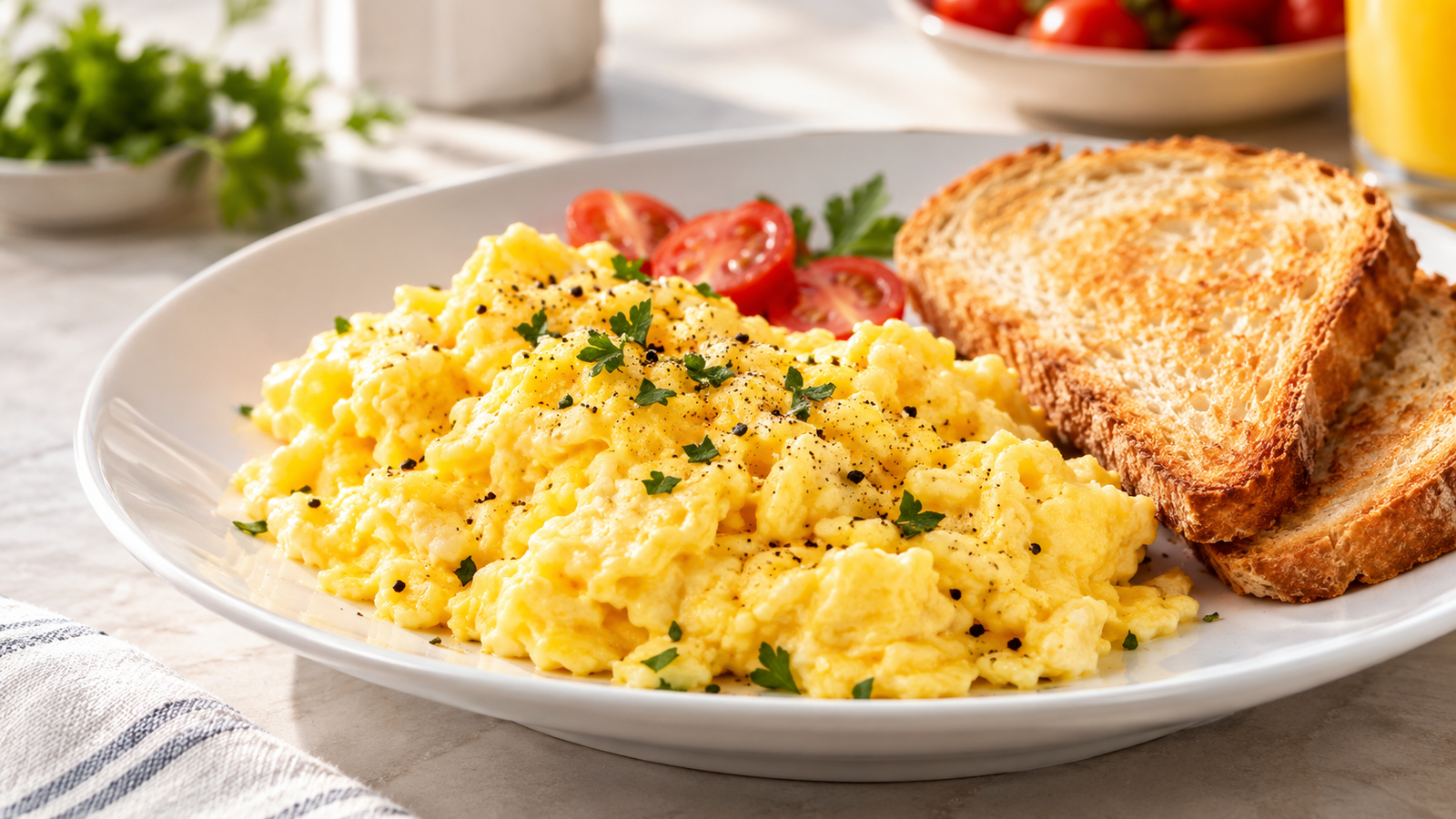
Easy Classic Scrambled Eggs
These scrambled eggs turn out soft, creamy, and gently folded into tender curds, thanks to a mix of low heat, a bit of butter, and constant gentle stirring. There’s no browning and no dry, rubbery texture — just smooth, custardy eggs from edge to edge.
The whole recipe comes together in about 10 minutes using ingredients most kitchens already have, which makes it a practical option for busy mornings or a simple weeknight breakfast-for-dinner.
Scrambled eggs pair well with almost anything, from toast and fresh fruit to breakfast potatoes or bacon, which makes them an easy centerpiece for a bigger breakfast spread or a quick meal on their own.
Quick Recipe Overview
- Prep Time: 5 minutes
- Cook Time: 5 minutes
- Total Time: 10 minutes
- Servings: 2
- Yield: About 1 ½ cups scrambled eggs
- Category: Breakfast
- Cuisine: American
- Difficulty Level: Easy
Ingredients
- 4 large eggs
- 2 tablespoons milk or heavy cream — optional, for extra creaminess
- 1 tablespoon unsalted butter
- ¼ teaspoon salt, or to taste
- 1/8 teaspoon black pepper, or to taste
Equipment
- Mixing bowl
- Whisk or fork
- Nonstick skillet
- Spatula
- Measuring spoons
- Serving plate
Step-by-Step Instructions
- Crack and whisk the eggs. Crack the eggs into a mixing bowl. Whisk vigorously for about 30 seconds, until the yolks and whites are fully combined and the mixture looks pale yellow and slightly frothy.
- Add milk or cream, if using. Whisk in the milk or cream until evenly incorporated. This step is optional but adds extra creaminess to the finished eggs.
- Season the eggs. Whisk in the salt and pepper directly into the egg mixture so the seasoning is distributed evenly.
- Heat the skillet. Place a nonstick skillet over low to medium-low heat. Let it warm for about a minute before adding the butter — the pan should be warm, not hot.
- Melt the butter. Add the butter to the skillet and let it melt fully, swirling the pan so it coats the bottom evenly. The butter should melt gently without browning or sizzling aggressively, which would mean the pan is too hot.
- Add the egg mixture. Pour the whisked eggs into the skillet. Let them sit undisturbed for about 15–20 seconds until the edges just begin to set.
- Cook over low heat, stirring gently. Using a spatula, gently push the eggs from the edges toward the center in slow, wide strokes. Continue cooking over low heat, pausing between strokes to let the eggs set slightly before folding again.
- Watch for soft curds forming. As the eggs cook, they will form soft, glossy curds. Keep folding gently rather than scrambling vigorously, which helps keep the texture soft instead of breaking the eggs into small, dry pieces.
- Remove from heat while still slightly wet. When the eggs are mostly set but still look slightly wet and glossy in a few spots, remove the skillet from the heat immediately. The residual heat will continue to cook the eggs for another 15–30 seconds as you transfer them to a plate, finishing them to a soft, creamy consistency without overcooking.
- Serve immediately. Transfer the eggs to a plate right away and serve hot, since scrambled eggs continue to firm up the longer they sit.
How to Make Soft and Creamy Scrambled Eggs
Whisk thoroughly. Whisking the eggs until the yolks and whites are fully blended incorporates air and helps create a lighter, more even texture once cooked.
Use low to moderate heat. Cooking scrambled eggs too quickly over high heat causes them to firm up unevenly and turn rubbery. Low heat gives you more control and produces smaller, softer curds.
Use enough butter. A full tablespoon of butter helps keep the eggs from sticking and adds richness that contributes to a creamier texture.
Stir gently and slowly. Folding the eggs in slow, wide strokes — rather than constant fast stirring — helps form soft curds instead of small, tough pieces.
Don’t wait for fully dry eggs. Removing the eggs from the heat while they still look slightly underdone is the key step, since they will keep cooking from residual heat after you take them off the burner.
Tips for Better Scrambled Eggs
- Use fresh eggs for the best flavor and texture.
- Whisk until the mixture is completely uniform, with no visible streaks of egg white.
- Let the skillet warm up for about a minute before adding butter, so the eggs cook evenly from the moment they hit the pan.
- Avoid high heat, which is the most common cause of dry, rubbery scrambled eggs.
- Use a nonstick skillet to prevent sticking and make cleanup easier.
- Serve the eggs right away, since they continue to cook and firm up if left in the hot pan or on a warm plate.
Common Mistakes
Eggs are rubbery: This usually happens from cooking over heat that’s too high. Lower the heat and cook more slowly, stirring gently rather than constantly.
Eggs are dry: Overcooking is the main cause. Remove the eggs from the heat while they still look slightly wet, since residual heat will finish cooking them.
Eggs stick to the pan: Make sure you’re using a nonstick skillet and enough butter. Also confirm the pan isn’t too hot, which can cause the eggs to set unevenly and stick in spots.
Eggs become watery: This can happen if the eggs are undercooked or if too much milk is added. Stick to the recommended 2 tablespoons of milk or cream and cook until mostly set before removing from heat.
Eggs brown too much: Browning means the heat is too high. Lower the heat and keep a close eye on the color as the eggs cook.
Eggs are undercooked: If the eggs still look very liquid after a few minutes, return the skillet to low heat for another 15–20 seconds, stirring gently, then check again.
Eggs become overcooked before serving: Since eggs keep cooking from residual heat, serve them immediately after removing from the pan rather than letting them sit.
Variations
- Cheesy Scrambled Eggs: Add ¼ cup shredded cheese during the last 15–20 seconds of cooking, folding gently until just melted.
- Herb Scrambled Eggs: Whisk in 1 tablespoon of chopped fresh herbs, such as chives or parsley, along with the seasoning in step 3.
- Garlic and Herb Scrambled Eggs: Sauté ¼ teaspoon of minced garlic in the butter for a few seconds before adding the eggs, then finish with chopped herbs at the end.
- Vegetable Scrambled Eggs: Sauté finely chopped vegetables, such as spinach or bell pepper, in the butter until softened before adding the whisked eggs.
- Spicy Scrambled Eggs: Add a pinch of red pepper flakes or a dash of hot sauce to the whisked eggs before cooking.
- Turkey or Chicken Scrambled Eggs: Fold in ¼ cup of diced, fully cooked turkey or chicken during the last minute of cooking to warm it through.
Serving Suggestions
- Serve with buttered toast or an English muffin.
- Pair with crispy breakfast potatoes.
- Add a side of fresh fruit for a lighter breakfast.
- Serve with sliced avocado or fresh tomatoes.
- Pair with sausage links or crispy bacon for a heartier plate.
Make-Ahead and Storage
Scrambled eggs are best made fresh and served immediately, since their soft, creamy texture doesn’t hold up well over time.
If you have leftovers, let them cool briefly, then transfer them to an airtight container and refrigerate promptly, within about 2 hours of cooking. Refrigerated scrambled eggs are best eaten within 3–4 days.
To reheat, warm the eggs gently in a skillet over low heat or in short bursts in the microwave, stirring in between. Reheating tends to firm up the texture further, so leftovers will be less creamy than freshly made eggs.
Frequently Asked Questions
Should I add milk to scrambled eggs? Milk or cream is optional. It adds a bit of extra creaminess, but the eggs will still turn out soft and tender without it.
What heat should I use? Low to medium-low heat is best. It gives you more control and helps prevent the eggs from turning rubbery or overcooking too quickly.
How do I make scrambled eggs creamy? Whisk the eggs thoroughly, cook them slowly over low heat, stir gently, and remove them from the pan while they still look slightly underdone.
Why are my scrambled eggs watery? This can happen if the eggs are undercooked or if extra liquid is added. Cook until mostly set and stick to the recommended amount of milk or cream.
Why are my eggs rubbery? Rubbery eggs are almost always the result of cooking over heat that’s too high or cooking them for too long. Lower the heat and remove the eggs promptly.
Can I add cheese? Yes, fold in shredded cheese during the last 15–20 seconds of cooking so it melts without overcooking the eggs.
Can I make scrambled eggs ahead of time? They’re best served fresh, but leftovers can be refrigerated in an airtight container and gently reheated, though the texture will be firmer than freshly cooked eggs.
How do I prevent eggs from sticking to the pan? Use a nonstick skillet, make sure there’s enough butter coating the pan, and avoid cooking over heat that’s too high.
Nutrition Information
Estimated per serving (recipe makes 2 servings):
- Calories: 190
- Protein: 13 g
- Carbohydrates: 1 g
- Fat: 15 g
- Saturated Fat: 6 g
- Cholesterol: 380 mg
- Sodium: 380 mg
Nutrition information is an estimate and may vary depending on the ingredients and serving size.
WordPress Recipe Card
Easy Classic Scrambled Eggs
Description: Soft, creamy scrambled eggs made with a few simple ingredients and ready in just 10 minutes.
Prep Time: 5 minutes Cook Time: 5 minutes Total Time: 10 minutes Servings: 2
Ingredients
- 4 large eggs
- 2 tablespoons milk or heavy cream, optional
- 1 tablespoon unsalted butter
- ¼ teaspoon salt, or to taste
- 1/8 teaspoon black pepper, or to taste
Instructions
- Whisk the eggs in a bowl until fully combined and slightly frothy.
- Whisk in the milk or cream, if using.
- Whisk in the salt and pepper.
- Warm a nonstick skillet over low to medium-low heat.
- Add the butter and let it melt fully without browning.
- Pour in the eggs and let them sit for 15–20 seconds.
- Gently push the eggs from the edges to the center in slow strokes.
- Continue cooking and folding gently until soft curds form.
- Remove from heat while the eggs still look slightly wet.
- Serve immediately.
Notes
- Remove the eggs from the heat while still slightly underdone; residual heat finishes cooking them.
- Cook over low heat for the softest, creamiest texture.
- A nonstick skillet helps prevent sticking and makes cleanup easier.
- Add cheese or herbs in the last 15–20 seconds of cooking for easy variations.
- Serve right away, since the eggs continue to firm up as they sit.