
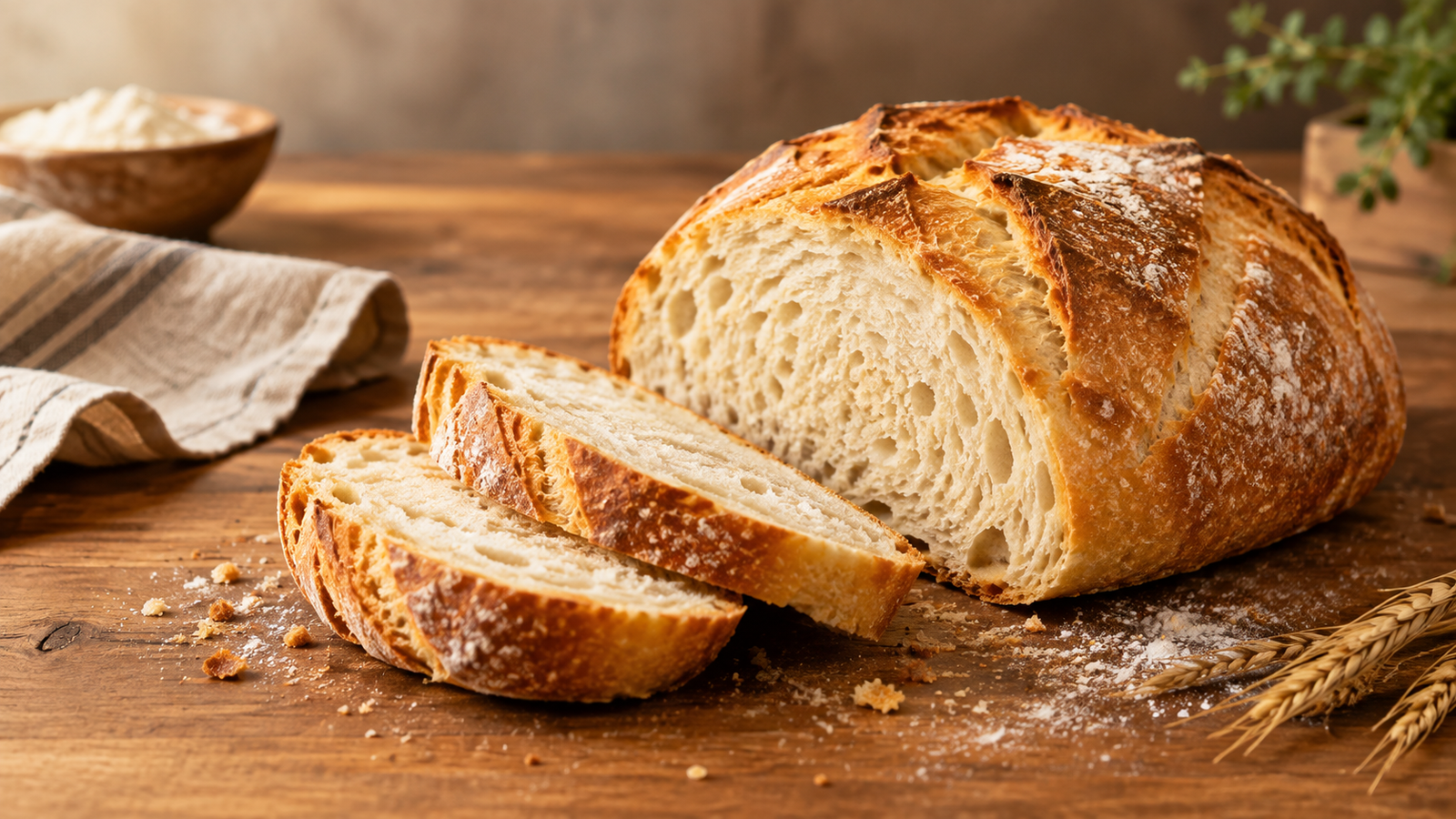
Here’s the complete post body, ready to paste into the WordPress editor:
Soft Cinnamon Swirl Bread Recipe (Bakery-Style, Step-by-Step)
This cinnamon swirl bread bakes up soft, slightly sweet, and ribboned with a buttery cinnamon-sugar filling in every slice. It’s an enriched yeast bread, which means the dough includes milk, butter, and egg, giving the crumb a tender, pillowy texture similar to a good sandwich loaf.
The cinnamon layer caramelizes slightly as it bakes, creating small pockets of gooey filling between the swirls. The crust stays soft rather than crackly, which makes this bread easy to slice thin for toast or thick for a bakery-style treat.
This loaf works well for a weekend baking project since it doesn’t require any specialty equipment or advanced techniques, just basic yeast bread skills and some patience during the rise times. It’s a good next step for anyone who has made a simple white bread before and wants to try shaping a swirl.
Serve it toasted with butter for breakfast, use it for French toast, or slice it fresh alongside coffee. It also makes a good homemade gift when wrapped and given to neighbors or coworkers.
Recipe Overview
- Preparation Time: 25 minutes (active)
- Rising Time: 1 hour 45 minutes (combined first and second rise)
- Baking Time: 35–40 minutes
- Total Time: About 3 hours
- Servings: 1 loaf (approximately 12 slices)
- Category: Dessert & Baking – Bread
- Cuisine: American
- Difficulty Level: Intermediate
Ingredients
For the dough:
- 3 1/2 cups (440 g) all-purpose flour, plus more for dusting
- 1/4 cup (50 g) granulated sugar
- 2 1/4 teaspoons (1 packet, 7 g) active dry yeast
- 1 teaspoon (6 g) salt
- 1 cup (240 ml) whole milk, warmed to about 110°F (43°C)
- 1/4 cup (57 g) unsalted butter, melted and slightly cooled
- 1 large egg, room temperature
For the cinnamon filling:
- 1/2 cup (100 g) packed light brown sugar
- 2 tablespoons ground cinnamon
- 3 tablespoons (43 g) unsalted butter, softened
For the optional glaze:
- 3/4 cup (90 g) powdered sugar
- 1 1/2 tablespoons whole milk
- 1/4 teaspoon vanilla extract
Equipment
- Large mixing bowl
- Measuring cups and spoons
- Stand mixer with dough hook, or a sturdy wooden spoon for hand mixing
- 9×5-inch loaf pan
- Rolling pin
- Clean kitchen towel or plastic wrap
- Oven
- Cooling rack
- Small bowl (for glaze, if using)
Step-by-Step Instructions
Activate the yeast:
- In a small bowl or measuring cup, combine the warm milk (110°F/43°C) with 1 tablespoon of the sugar from the dough ingredients and the yeast. Stir gently and let it sit for 5–10 minutes until it becomes foamy on top. If it doesn’t foam, the yeast may be inactive; start over with a fresh packet.
Mix the dough:
2. In a large mixing bowl (or the bowl of a stand mixer), whisk together the flour, remaining sugar, and salt.
3. Add the foamy yeast mixture, melted butter, and egg to the dry ingredients. Mix on low speed with a dough hook, or stir by hand, until a shaggy dough forms.
Knead:
4. Increase the mixer speed to medium and knead for 6–8 minutes, or knead by hand on a lightly floured surface for 8–10 minutes. The dough is ready when it becomes smooth, elastic, and slightly tacky but no longer sticks heavily to your hands. It should spring back slowly when poked.
First rise:
5. Shape the dough into a ball and place it in a lightly greased bowl. Cover with a damp kitchen towel or plastic wrap. Let it rise in a warm spot for about 1 hour, or until doubled in size.
Prepare the filling:
6. While the dough rises, stir together the brown sugar and cinnamon in a small bowl. Set aside along with the softened butter.
Shape the loaf:
7. Punch down the risen dough to release air, then turn it onto a lightly floured surface. Roll it into a rectangle roughly 9×18 inches.
8. Spread the softened butter evenly over the surface of the dough, leaving a 1/2-inch border around the edges.
9. Sprinkle the cinnamon-sugar mixture evenly over the buttered dough, pressing it gently so it adheres.
10. Starting from one short end, roll the dough tightly into a log. Pinch the seam closed and tuck the ends under.
11. Place the log seam-side down into a greased 9×5-inch loaf pan.
Second rise:
12. Cover the loaf pan loosely with a towel or plastic wrap and let it rise for 45 minutes, or until the dough has risen about 1 inch above the rim of the pan.
Bake:
13. Preheat the oven to 350°F (175°C) about 15 minutes before the second rise finishes.
14. Bake the loaf for 35–40 minutes, until the top is deep golden brown and the internal temperature reads 190°F (88°C) on an instant-read thermometer. If the top browns too quickly, loosely tent it with foil after the first 20 minutes.
Cool:
15. Remove the loaf from the oven and let it cool in the pan for 10 minutes. Then transfer it to a cooling rack and let it cool for at least 30 minutes before slicing. Slicing too early can cause the swirl layers to separate.
Glaze (optional):
16. Whisk together powdered sugar, milk, and vanilla until smooth. Drizzle over the cooled loaf before serving.
Important Baking Tips
- Measure flour correctly: Spoon the flour into the measuring cup and level it off with a knife rather than scooping directly from the bag, which can pack in too much flour and dry out the loaf.
- Check milk temperature: Milk that is too hot (above 120°F/49°C) can kill the yeast. Use a thermometer if you’re unsure, or test with a clean finger — it should feel warm, not hot.
- Knead until properly developed: Under-kneaded dough won’t trap air well and produces a dense loaf. The dough should feel smooth and elastic, not stiff or tearing.
- Give the dough a proper first rise: Doubling in size is the visual cue to look for, not just a set amount of time, since rise speed varies with room temperature.
- Roll the filling in tightly: A loose roll leaves gaps that can cause the swirl to separate during baking.
- Watch the internal temperature: Using an instant-read thermometer is the most reliable way to confirm doneness, since enriched dough can look golden on the outside before it’s fully baked inside.
- Let it cool before slicing: Cutting into hot bread lets steam escape too quickly, which can make the crumb gummy and cause the swirl to pull apart.
Common Mistakes
- Bread is dense: Usually caused by under-kneading, expired yeast, or not allowing a full first rise. Make sure the dough doubles before shaping.
- Bread doesn’t rise: Often the result of yeast that wasn’t activated properly, either from milk that was too hot or too cool, or from expired yeast.
- Swirl separates when sliced: This happens when the filling layer is too thick, the roll is too loose, or the bread is sliced before it has fully cooled.
- Bread browns too quickly on top: The sugar content in enriched dough browns faster than lean bread dough. Tent the loaf with foil partway through baking if this happens.
- Center is underbaked despite a golden crust: This is common with enriched loaves. Rely on an instant-read thermometer (190°F/88°C) rather than crust color alone.
- Dough is too sticky to handle: Add flour one tablespoon at a time during kneading, but avoid adding too much, which can make the finished bread dry.
Variations
- Whole-wheat swirl bread: Substitute up to half of the all-purpose flour with whole-wheat flour. The dough will be slightly denser, so allow a bit more time for both rises.
- Raisin cinnamon swirl bread: Sprinkle 1/2 cup of raisins over the cinnamon-sugar layer before rolling the dough.
- Nutty version: Add 1/3 cup of finely chopped pecans or walnuts to the cinnamon-sugar filling for extra texture.
- Cream cheese swirl bread: Spread a thin layer of softened cream cheese under the cinnamon-sugar mixture for a richer filling.
- Dairy-free version: Replace the whole milk with a dairy-free milk alternative and use a plant-based butter substitute in equal amounts.
Storage Instructions
- Room temperature: Store the cooled loaf in an airtight container or wrapped in plastic wrap for up to 4 days.
- Refrigeration: Refrigeration isn’t necessary and can dry out the bread faster; room temperature storage is preferred for short-term use.
- Freezing: Wrap the fully cooled loaf tightly in plastic wrap, then in foil, and freeze for up to 3 months. Individual slices can also be frozen separately for easier portioning.
- Reheating: Thaw frozen bread at room temperature, then warm individual slices in a toaster or in a 300°F (150°C) oven for a few minutes to refresh the texture.
Serving Suggestions
Serve slices toasted with butter or a light spread of cream cheese. This bread also works well as the base for French toast or a simple bread pudding. For breakfast or brunch, pair it with coffee, tea, or fresh fruit. A drizzle of the optional glaze turns it into a more dessert-like treat for an afternoon snack.
Frequently Asked Questions
Can I use instant yeast instead of active dry yeast?
Yes. Instant yeast can be mixed directly into the dry ingredients without proofing in milk first. If substituting, you can skip the foaming step, though allowing it to sit briefly in the warm milk won’t harm the recipe.
Can I make the dough ahead of time?
Yes. After the first rise, you can shape the loaf, place it in the pan, cover tightly, and refrigerate overnight. Let it come to room temperature and complete its second rise (about 45–60 minutes) before baking.
Can I freeze the bread?
Yes. Wrap the fully cooled loaf tightly and freeze for up to 3 months. Thaw at room temperature before slicing or reheating.
Why did my bread not rise?
This is usually due to inactive yeast, milk that was too hot or too cold, or a cold rising environment. Confirm the yeast foams during activation and let the dough rise somewhere warm and draft-free.
How do I know when the bread is fully baked?
The crust should be deep golden brown, and an instant-read thermometer inserted into the center should read about 190°F (88°C).
Why did my cinnamon swirl separate from the bread?
This typically happens when the dough is rolled too loosely, the filling layer is too thick, or the bread is sliced before cooling completely.
Can I make this bread without a stand mixer?
Yes. The dough can be mixed and kneaded by hand; it will just take a few extra minutes of kneading to reach the right texture.
Do I need to use a loaf pan?
A 9×5-inch loaf pan is recommended for the right shape and rise, but a similarly sized pan can be substituted with minor adjustments to baking time.
Nutrition Information (Estimated, Per Slice)
- Calories: 210
- Carbohydrates: 35 g
- Protein: 4 g
- Fat: 6 g
- Fiber: 1 g
- Sugar: 11 g
- Sodium: 140 mg
Nutrition values are estimates only and may vary depending on specific ingredients, brands, and exact serving sizes used.
Recipe Card
Soft Cinnamon Swirl Bread
A soft, enriched yeast bread with a buttery cinnamon-sugar swirl running through every slice, finished with an optional glaze.
- Prep Time: 25 minutes
- Rising Time: 1 hour 45 minutes
- Bake Time: 35–40 minutes
- Total Time: About 3 hours
- Servings: 1 loaf (12 slices)
Ingredients:
Dough — 3 1/2 cups all-purpose flour, 1/4 cup granulated sugar, 2 1/4 tsp active dry yeast, 1 tsp salt, 1 cup warm whole milk, 1/4 cup melted butter, 1 large egg.
Filling — 1/2 cup brown sugar, 2 tbsp ground cinnamon, 3 tbsp softened butter.
Glaze (optional) — 3/4 cup powdered sugar, 1 1/2 tbsp milk, 1/4 tsp vanilla extract.
Instructions:
- Proof yeast in warm milk with a little sugar until foamy.
- Mix flour, sugar, and salt; add yeast mixture, butter, and egg; form a dough.
- Knead 6–10 minutes until smooth and elastic.
- Let rise 1 hour, until doubled.
- Roll dough into a rectangle; spread with butter and cinnamon-sugar.
- Roll into a log; place seam-side down in a greased loaf pan.
- Let rise 45 minutes, until above the rim of the pan.
- Bake at 350°F (175°C) for 35–40 minutes, until 190°F (88°C) internally.
- Cool 10 minutes in the pan, then 30 minutes on a rack before slicing.
- Drizzle with glaze, if using.
Notes: Slice only after the loaf has fully cooled to prevent the swirl from separating. Store at room temperature up to 4 days, or freeze up to 3 months.
The meta title, meta description, slug, and image alt text are in the .txt file (not pasted above) since those go in WordPress’s SEO fields and media library rather than the post body itself.