
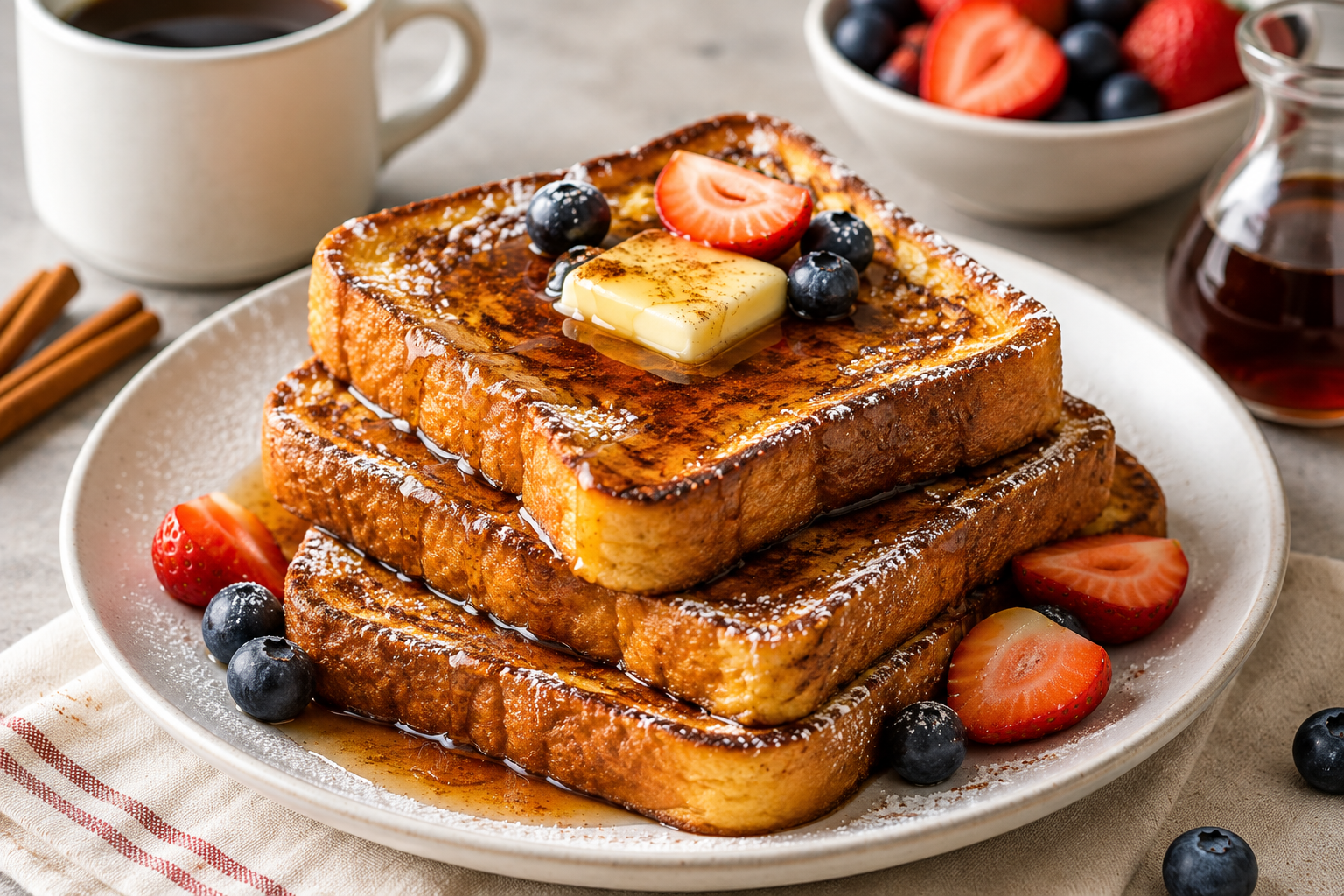
Classic Cinnamon French Toast Recipe
There’s a reason French toast has stuck around on breakfast tables for generations — it turns a few basic pantry staples into something that feels like a treat. This version leans into warm cinnamon and a hint of vanilla, soaked into thick slices of bread and cooked until the outside is golden and slightly crisp while the inside stays soft and custardy. It comes together in about 20 minutes with nothing fancy required, which makes it just as good for a rushed weekday morning as it is for a slow Sunday brunch with people gathered around the table. If you’ve ever ended up with French toast that’s either soggy in the middle or dry and rubbery, this recipe walks through exactly how to avoid both.
Why You’ll Love This French Toast
- It uses everyday ingredients you probably already have in the kitchen.
- The custard mixture is quick to whisk together, so there’s no waiting around.
- Thick-cut bread gives you that classic contrast of a crisp crust and a soft, custardy center.
- It’s easy to scale up for a crowd or scale down for a solo breakfast.
- The cinnamon flavor comes through in every bite instead of just sitting on top.
- It works with pantry staples, so there’s no special shopping trip needed.
Ingredients
This recipe makes 4 servings (about 8 slices of French toast).
- 8 slices thick-cut bread (about 3/4 inch or 2 cm thick), slightly stale or lightly dried out
- 4 large eggs
- 1 cup whole milk (240 ml) — see substitutions below for other options
- 1/3 cup heavy cream or half-and-half (80 ml), optional, for extra richness
- 2 teaspoons ground cinnamon
- 1 teaspoon vanilla extract
- 2 tablespoons granulated sugar (optional, for a slightly sweeter custard)
- 1/4 teaspoon salt
- 1/4 teaspoon ground nutmeg (optional, but pairs nicely with the cinnamon)
- 3–4 tablespoons unsalted butter, for cooking, divided
- Maple syrup, for serving
Equipment
- Large shallow bowl or pie dish (for dipping the bread)
- Whisk or fork
- Large non-stick skillet or griddle
- Spatula
- Baking sheet and wire rack (if keeping slices warm in the oven)
- Measuring cups and spoons
How to Make Classic Cinnamon French Toast
1. Prepare the custard. In a large shallow bowl, crack the eggs and whisk them until the yolks and whites are fully combined and slightly frothy. Add the milk, heavy cream (if using), cinnamon, vanilla extract, sugar, salt, and nutmeg. Whisk everything together until smooth and evenly blended. The mixture should look pale and slightly foamy, with no streaks of egg white left.
2. Prepare the bread. Use thick slices of bread, ideally cut about 3/4 inch thick. If your bread is fresh and soft, let the slices sit out on a wire rack for 20–30 minutes, or lightly toast them for a minute or two. Slightly dried bread soaks up the custard without falling apart, which is the secret to French toast that holds together well.
3. Heat the pan. Set a large skillet or griddle over medium heat and let it warm up for 2–3 minutes before adding any butter. A pan that’s properly preheated cooks the bread evenly instead of leaving pale, undercooked spots. Add about 1 tablespoon of butter and swirl it around so it coats the surface and starts to foam gently, without browning too fast.
4. Dip the bread correctly. Place one slice of bread into the custard mixture and let it sit for about 15–20 seconds per side. Thicker bread can handle a slightly longer soak, but avoid leaving it in for more than 30 seconds, since overly soaked bread tends to fall apart or turn mushy once it hits the pan. Let any excess custard drip off before moving the slice to the skillet.
5. Cook both sides. Place the soaked bread in the hot, buttered pan. Cook for about 3–4 minutes on the first side, until it’s deep golden brown, then flip and cook for another 3–4 minutes on the second side. Resist the urge to press down on the slices with your spatula — this squeezes out the custard and makes the toast dense instead of fluffy.
6. Keep finished slices warm. If you’re cooking in batches, transfer finished slices to a wire rack set over a baking sheet and keep them in a 200°F (95°C) oven while you cook the rest. This keeps them warm without making them soggy, which is what happens if you stack them directly on top of each other or cover them tightly.
7. Serve. Once all the slices are cooked, serve immediately while everything is warm. A dusting of extra cinnamon, a pat of butter, and a drizzle of maple syrup are all it really needs.
Tips for Perfect French Toast
- Choosing the right bread: Sturdy, thick-cut bread like brioche, challah, or a thick white sandwich loaf holds up best. Soft, thin sandwich bread tends to fall apart once it’s dipped in custard.
- Avoiding soggy French toast: Use bread that’s a day or two old, or lightly dry it out in a low oven or toaster. Fresh, soft bread absorbs too much liquid and turns mushy.
- Getting an even golden-brown crust: Make sure your pan is fully preheated before the butter goes in, and don’t overcrowd the pan — give each slice room to cook evenly on all sides.
- Controlling pan temperature: Medium heat is the sweet spot. Too high, and the outside burns before the inside cooks through; too low, and the bread turns pale and soggy instead of crisp.
- Getting the cinnamon evenly distributed: Whisk the custard thoroughly before dipping any bread, and give it a quick stir between slices, since spices like cinnamon can settle at the bottom of the bowl.
Common Mistakes to Avoid
- Using bread that’s too fresh or too thin. Soft, fresh bread absorbs custard unevenly and can turn to mush. Stick with thick, slightly stale slices for the best texture.
- Soaking the bread for too long. A quick 15–20 second dip per side is enough. Longer soaking makes the bread soggy and hard to flip without tearing.
- Cooking over heat that’s too high. This browns the outside too quickly while leaving the inside undercooked and eggy. Medium heat gives the custard time to set properly.
- Skipping the preheat. Adding bread to a cold or barely warm pan leads to pale, greasy French toast instead of a crisp, golden crust.
- Not whisking the custard well enough. If the eggs aren’t fully combined with the milk and spices, you can end up with streaky, unevenly cooked toast.
- Overcrowding the pan. Cramming too many slices in at once drops the pan’s temperature and makes it harder to flip each piece without disturbing the others.
Ingredient Substitutions
- Milk: Whole milk gives the richest result, but 2% milk works fine too. For a dairy-free option, oat milk or full-fat coconut milk both work well and hold up nicely in the custard.
- Bread: No brioche or challah on hand? A thick white sandwich loaf, French bread, or even leftover dinner rolls sliced thick can all work as long as they’re sturdy enough to hold their shape.
- Butter: Neutral oil or a plant-based butter alternative can be swapped in for cooking if needed, though butter gives the best flavor and browning.
- Vanilla: Almond extract can replace vanilla, but use about half the amount since it’s more concentrated in flavor.
- Cinnamon: Pumpkin pie spice or apple pie spice can be used in place of plain cinnamon for a slightly different, more layered flavor.
French Toast Variations
- Stuffed French Toast: Spread a thin layer of cream cheese or mascarpone between two slices of bread before dipping and cooking, for a filled version.
- Banana Cinnamon French Toast: Mash half a ripe banana into the custard mixture for natural sweetness and a soft, slightly fruity flavor.
- Baked Cinnamon French Toast Casserole: Cube the bread, mix it with the custard, and bake it in a dish at 350°F (175°C) for about 35–40 minutes for a hands-off, crowd-friendly version.
- Cinnamon Roll French Toast: Use sliced cinnamon rolls in place of bread for an extra-sweet, bakery-style twist.
- Savory-Sweet French Toast: Add a small pinch of black pepper to the custard and serve with crispy bacon on the side for a sweet-and-savory combination.
How to Store Leftover French Toast
Let any leftover French toast cool completely to room temperature before storing, since trapping steam in a container while it’s still warm leads to sogginess. Once cooled, place the slices in an airtight container, separating layers with parchment paper if you’re stacking them. Store in the refrigerator for up to 3 days.
To freeze, arrange cooled slices in a single layer on a baking sheet and freeze for about an hour until firm. Then transfer them to a freezer-safe bag or container, again separating layers with parchment paper, and freeze for up to 2 months. Label the bag with the date so you know how long they’ve been stored.
How to Reheat French Toast
- Skillet: Reheat over medium-low heat for 2–3 minutes per side. This is the best method for restoring a crisp exterior without drying out the inside.
- Oven: Arrange slices on a baking sheet and warm at 350°F (175°C) for about 8–10 minutes, flipping halfway through. This works well for reheating multiple slices at once.
- Air Fryer: Reheat at 350°F (175°C) for 3–4 minutes, flipping once halfway through. This method is quick and gives the crust a nice crisp finish without added oil or butter.
Frozen slices can go straight into the oven or air fryer from frozen — just add a few extra minutes to the cooking time until they’re heated through.
Frequently Asked Questions
What bread is best for French toast? Thick, sturdy bread like brioche, challah, or a dense white sandwich loaf works best. It holds its shape after soaking and gives you that classic contrast between a crisp outside and soft inside.
Why does my French toast become soggy? Soggy French toast usually comes from using bread that’s too fresh and soft, soaking it too long in the custard, or cooking over heat that’s too low. Slightly stale, thick-cut bread and a quick dip solve most of this.
Can I make French toast ahead of time? Yes. You can whisk the custard the night before and store it covered in the fridge, or cook the French toast fully and reheat it the next morning using the skillet or oven method.
Can I freeze French toast? Yes, cooked and cooled French toast freezes well for up to 2 months. Freeze slices in a single layer first, then transfer to a freezer bag so they don’t stick together.
Can I use regular sandwich bread? You can, though it’s more delicate than thicker bread and may soak up custard unevenly. If using sandwich bread, dip it quickly and handle it gently while cooking to avoid tearing.
How do I make French toast extra crispy? Use bread that’s slightly dried out, don’t over-soak it in the custard, and make sure your pan is properly preheated with enough butter. Cooking over medium heat for a few extra minutes per side also helps develop a deeper, crisper crust.
Do I need to use both milk and cream? No, this is optional. Milk alone works fine for a lighter custard, while adding cream gives a richer, slightly denser result. Use whichever fits what you have on hand.
Serving Suggestions
French toast pairs naturally with maple syrup, a light dusting of powdered sugar, and a pat of butter melting on top. Fresh fruit like sliced bananas, strawberries, or blueberries adds a fresh contrast, and a spoonful of yogurt or whipped cream can round things out for a brunch spread. On the savory side, crispy bacon or breakfast sausage links make a solid pairing if you want something to balance out the sweetness. A simple glass of orange juice or a cup of coffee rounds out the meal nicely.
Recipe Card
Recipe Name: Classic Cinnamon French Toast
Prep Time: 10 minutes
Cook Time: 10 minutes
Total Time: 20 minutes
Servings: 4
Ingredients:
- 8 slices thick-cut bread (about 3/4 inch or 2 cm thick), slightly stale
- 4 large eggs
- 1 cup whole milk (240 ml)
- 1/3 cup heavy cream or half-and-half (80 ml), optional
- 2 teaspoons ground cinnamon
- 1 teaspoon vanilla extract
- 2 tablespoons granulated sugar, optional
- 1/4 teaspoon salt
- 1/4 teaspoon ground nutmeg, optional
- 3–4 tablespoons unsalted butter, for cooking
- Maple syrup, for serving
Instructions:
- Whisk eggs, milk, cream, cinnamon, vanilla, sugar, salt, and nutmeg together in a shallow bowl.
- Let bread sit out to dry slightly, or lightly toast if it’s fresh.
- Preheat a skillet over medium heat and add butter.
- Dip each bread slice in the custard for 15–20 seconds per side.
- Cook slices 3–4 minutes per side, until golden brown.
- Keep finished slices warm on a wire rack in a low oven.
- Serve warm with maple syrup and desired toppings.
Storage: Refrigerate cooled leftovers in an airtight container for up to 3 days. Freeze cooled slices in a single layer, then transfer to a freezer bag for up to 2 months.
Give this Classic Cinnamon French Toast a try the next time you want a breakfast that feels a little more special without any extra effort. With a well-balanced custard and a few simple techniques, it’s an easy recipe to make your own and one you’ll likely find yourself coming back to often.