
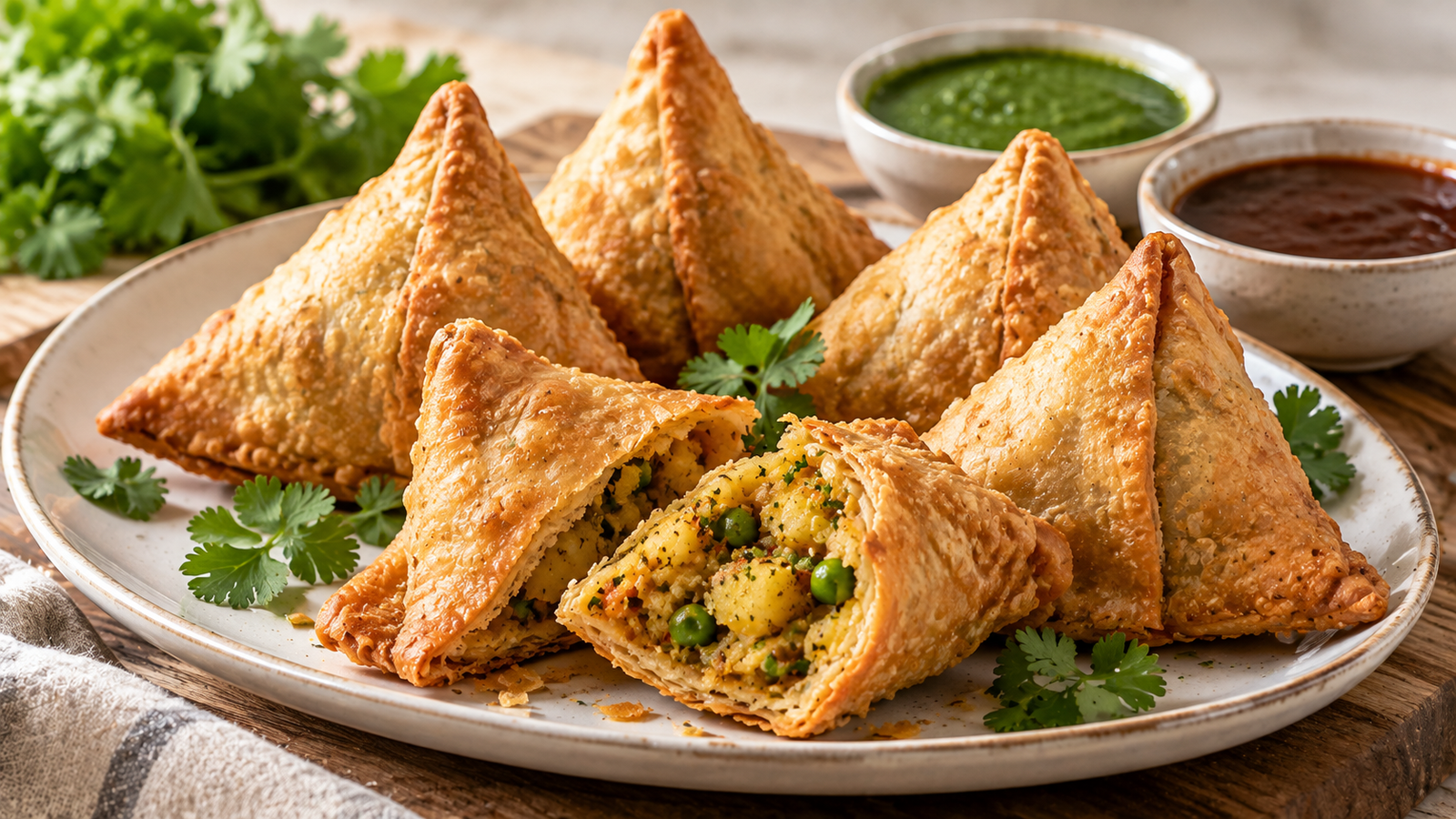
Crispy Homemade Potato Samosas
Introduction
Crispy potato samosas are a popular savory snack made from a simple flour dough wrapped around a seasoned potato and pea filling, then fried until golden and crisp. The contrast between the crunchy outer shell and the soft, spiced filling is what makes this snack so satisfying, and it’s achievable at home with a handful of pantry staples and a bit of patience.
What sets a good samosa apart is the texture of both the dough and the filling. A properly made dough fries up into a shell that shatters slightly when bitten into, while the potato filling should be well-seasoned but not mushy, with the peas adding a bit of texture and sweetness. Getting these details right doesn’t require special equipment, just attention to a few key steps along the way.
This homemade potato samosa recipe is well suited for an afternoon snack, a party appetizer, or a side dish alongside chutneys or tea. Because the filling and dough can both be prepared ahead of time, samosas are also a practical make-ahead option for entertaining or batch cooking.
The instructions below walk through the entire process from boiling the potatoes to frying the finished samosas, along with tips for getting a consistently crispy result every time.
Recipe Overview
| Detail | Information |
|---|---|
| Prep Time | 40 minutes |
| Cook Time | 30 minutes |
| Total Time | 1 hour 10 minutes |
| Servings | 12 samosas |
| Difficulty | Intermediate |
| Cuisine | South Asian |
| Course | Snack, Appetizer |
Ingredients
Samosa Filling
- 4 medium potatoes (about 700 g), peeled
- 1/2 cup green peas, fresh or frozen
- 1/2 cup finely chopped onion
- 1 fresh green chili, finely chopped (optional)
- 2 tablespoons chopped fresh cilantro
- 1 teaspoon ground cumin
- 1 teaspoon ground coriander
- 1 teaspoon garam masala
- 1/2 teaspoon red chili powder
- 1 teaspoon salt, or to taste
- 1 tablespoon lemon juice
- 2 tablespoons cooking oil
Samosa Dough
- 2 cups all-purpose flour
- 1/2 teaspoon salt
- 4 tablespoons oil or melted ghee
- 6–7 tablespoons cold water, as needed
For Frying
- Oil, enough for deep frying (about 3–4 cups depending on pot size)
Equipment
- Large pot
- Mixing bowl
- Rolling pin
- Knife
- Cutting board
- Deep frying pan or pot
- Slotted spoon
- Paper towel-lined plate or cooling rack
How to Make Crispy Potato Samosas
- Boil the potatoes. Place the peeled potatoes in a large pot, cover with water, and bring to a boil. Cook for 15–20 minutes, or until a knife slides easily into the center. Drain and let cool slightly, then dice or coarsely mash the potatoes, leaving some texture rather than a smooth puree.
- Cook the peas. If using fresh peas, boil or steam them for 3–4 minutes until tender. If using frozen peas, thaw them under warm water or add them directly to the pan during the filling step, since they cook quickly.
- Prepare the seasoned filling. Heat the cooking oil in a pan over medium heat. Add the chopped onion and cook for 2–3 minutes until softened. Add the green chili, if using, and cook for another minute.
- Add the spices. Stir in the ground cumin, ground coriander, garam masala, and red chili powder, cooking for about 30 seconds until fragrant.
- Combine the filling. Add the boiled potatoes and peas to the pan, along with the salt and lemon juice. Mix gently to combine, mashing some of the potato lightly while leaving some chunks for texture. Stir in the chopped cilantro. Remove from heat and let the filling cool to room temperature before assembling the samosas.
- Make the dough. In a mixing bowl, combine the flour and salt. Add the oil or melted ghee and rub it into the flour with your fingers until the mixture resembles coarse breadcrumbs.
- Add water gradually. Add the cold water a tablespoon at a time, mixing and kneading until a firm, smooth dough forms. The dough should be stiffer than typical bread dough and should not feel sticky.
- Rest the dough. Cover the dough with a damp cloth or plastic wrap and let it rest for 20–30 minutes. This allows the gluten to relax, making the dough easier to roll.
- Divide and roll the dough. Divide the rested dough into 6 equal balls. Roll each ball into a thin oval, about 6–7 inches long, on a lightly floured surface.
- Cut and shape each samosa. Cut each oval in half to create two semicircles. Take one semicircle and form a cone shape by bringing the straight edge together and overlapping slightly, sealing the seam with a dab of water.
- Fill and seal the samosas. Spoon about 2 tablespoons of the cooled potato filling into each cone. Moisten the top edges with a little water, then press and pleat them together firmly to seal, ensuring there are no gaps.
- Heat the oil. Pour oil into a deep frying pan or pot to a depth of about 2–3 inches and heat to approximately 325–350°F (165–175°C). The oil is ready when a small piece of dough dropped in sizzles gently and rises slowly, rather than browning instantly.
- Fry the samosas. Carefully lower a few samosas into the oil at a time, avoiding overcrowding. Fry for 8–10 minutes, turning occasionally, until the samosas are evenly golden brown and crisp on all sides.
- Drain and cool. Use a slotted spoon to remove the samosas and place them on a paper towel-lined plate or cooling rack to drain excess oil. Let them cool for a few minutes before serving, as the filling will be very hot.
The samosas are done when the shell is a deep golden color and feels firm and crisp to the touch, with a slight crackling sound when tapped.
How to Make Samosas Extra Crispy
- Get the dough consistency right: The dough should be firm and slightly stiff, not soft or sticky. A softer dough absorbs more oil and results in a less crisp shell.
- Use enough fat in the dough: The oil or ghee rubbed into the flour helps create flaky, crisp layers, so don’t skip or reduce this step.
- Avoid excessive water: Adding too much water makes the dough soft and harder to roll thin, which affects the final crispness.
- Don’t overfill: Overfilled samosas are more likely to burst open during frying, which lets oil in and moisture out unevenly.
- Seal the edges well: Properly pleated and sealed edges keep the samosas intact during frying and prevent oil from seeping into the filling.
- Maintain the right oil temperature: Oil that’s too hot browns the outside too quickly while leaving the inside undercooked, while oil that’s too cool makes the samosas greasy. Frying at a moderate, steady temperature gives the best texture.
- Avoid overcrowding the pan: Adding too many samosas at once drops the oil temperature and leads to uneven, less crispy results.
Tips for the Best Potato Samosas
- Cook the potatoes until just tender; overcooked potatoes can make the filling too soft and mushy.
- Let the filling cool completely before assembling, since warm filling can soften the dough and make sealing more difficult.
- Roll the dough evenly so the shell cooks at a consistent rate.
- Fry samosas at a moderate, steady temperature and turn them occasionally for even browning.
- Taste the filling before assembling and adjust the salt, lemon juice, or spice level to your preference.
Common Mistakes to Avoid
- Making the dough too soft: This leads to a chewy or greasy shell rather than a crisp one.
- Using excessive water: Too much water in the dough makes it difficult to roll thin and reduces crispness.
- Overfilling the samosas: This makes sealing difficult and increases the chance of the samosa opening during frying.
- Poorly sealed edges: Gaps in the seal allow oil to seep in and filling to leak out.
- Frying at excessively high heat: This browns the outside too quickly while leaving the inside underdone.
- Overcrowding the pan: This lowers the oil temperature and results in soggy, unevenly cooked samosas.
- Serving without draining: Skipping the draining step leaves the samosas greasy rather than crisp.
Variations
- Vegetable Samosas: Add finely chopped carrots, corn, or green beans to the potato filling for extra vegetables.
- Chicken Samosas: Replace some or all of the potato filling with cooked, minced, and seasoned chicken.
- Spicy Potato Samosas: Increase the amount of green chili or red chili powder for extra heat.
- Cheese Samosas: Add a small amount of shredded or cubed cheese to the filling for a melty addition.
- Baked Samosas: Brush assembled samosas with oil and bake at 400°F (200°C) for 25–30 minutes, flipping halfway, for a lighter alternative to frying.
- Air-Fryer Samosas: Brush samosas lightly with oil and air fry at 375°F (190°C) for about 15–18 minutes, flipping halfway, until golden and crisp.
Storage and Reheating
Store cooled, cooked samosas in an airtight container in the refrigerator for up to 3 days. For longer storage, uncooked, assembled samosas can be frozen on a tray until firm, then transferred to a freezer bag for up to 2 months; fry them directly from frozen, adding a few extra minutes to the cooking time.
To reheat cooked samosas while restoring crispness, use an oven or air fryer at around 350°F (175°C) for 8–10 minutes, or warm them in a dry skillet over medium-low heat, turning occasionally. Microwaving is not recommended for reheating, as it tends to make the shell soft rather than crisp.
Serving Suggestions
Potato samosas are traditionally served with:
- Mint chutney
- Tamarind chutney
- A yogurt-based dip
- Chaat-style toppings, such as chopped onion and a drizzle of chutney
- A cup of tea
Frequently Asked Questions
Why are my samosas not crispy? This is usually caused by a dough that’s too soft, too much water in the dough, or frying at too low a temperature. Ensuring a firm dough and a steady oil temperature helps achieve a crisp shell.
How do I stop samosas from opening while frying? Make sure the edges are sealed tightly with a bit of water and firmly pressed pleats, and avoid overfilling the samosas beyond what the dough can comfortably hold.
Can I bake samosas instead of frying them? Yes, baked samosas are a lighter alternative, though the texture will be slightly less crisp than fried versions. Instructions are included in the variations section.
Can I use frozen peas? Yes, frozen peas work well in this recipe and can be added directly to the filling, since they cook quickly.
Can I make samosas ahead of time? Yes, both the filling and the assembled, uncooked samosas can be prepared in advance and refrigerated or frozen until ready to fry.
How long do homemade samosas last? Cooked samosas can be stored in the refrigerator for up to 3 days.
Can I freeze uncooked samosas? Yes, assembled but uncooked samosas can be frozen for up to 2 months and fried directly from frozen.
What oil is best for frying samosas? A neutral oil with a high smoke point, such as vegetable, canola, or sunflower oil, works well for deep frying samosas.
Nutrition (Estimated, Per Serving)
This is an approximate estimate based on the ingredients listed and may vary depending on specific brands, portion sizes, and how much oil is absorbed during frying.
| Nutrient | Approximate Amount |
|---|---|
| Calories | 160 kcal |
| Protein | 3 g |
| Carbohydrates | 20 g |
| Fat | 8 g |
| Fiber | 2 g |
| Sodium | 220 mg |
Recipe Card
Crispy Homemade Potato Samosas
Golden, crispy pastry shells filled with a seasoned potato and pea filling, fried until crisp.
- Prep Time: 40 minutes
- Cook Time: 30 minutes
- Total Time: 1 hour 10 minutes
- Servings: 12 samosas
Ingredients
Filling
- 4 medium potatoes (about 700 g), peeled and boiled
- 1/2 cup green peas
- 1/2 cup finely chopped onion
- 1 fresh green chili, chopped (optional)
- 2 tablespoons chopped fresh cilantro
- 1 teaspoon ground cumin
- 1 teaspoon ground coriander
- 1 teaspoon garam masala
- 1/2 teaspoon red chili powder
- 1 teaspoon salt
- 1 tablespoon lemon juice
- 2 tablespoons cooking oil
Dough
- 2 cups all-purpose flour
- 1/2 teaspoon salt
- 4 tablespoons oil or melted ghee
- 6–7 tablespoons cold water
For frying
- Oil, as needed for deep frying
Instructions
- Boil the potatoes until tender, then dice or coarsely mash.
- Sauté onion and spices in oil, then mix in the potatoes, peas, salt, lemon juice, and cilantro; cool completely.
- Make a firm dough from the flour, salt, oil, and water; rest for 20–30 minutes.
- Roll into ovals, cut in half, and shape each half into a cone.
- Fill each cone with the potato mixture and seal the edges tightly.
- Deep fry at 325–350°F (165–175°C) for 8–10 minutes until golden and crisp.
- Drain on paper towels and cool slightly before serving.
Notes Keep the dough firm rather than soft, seal the edges well, and avoid overcrowding the pan while frying for the crispest results.