
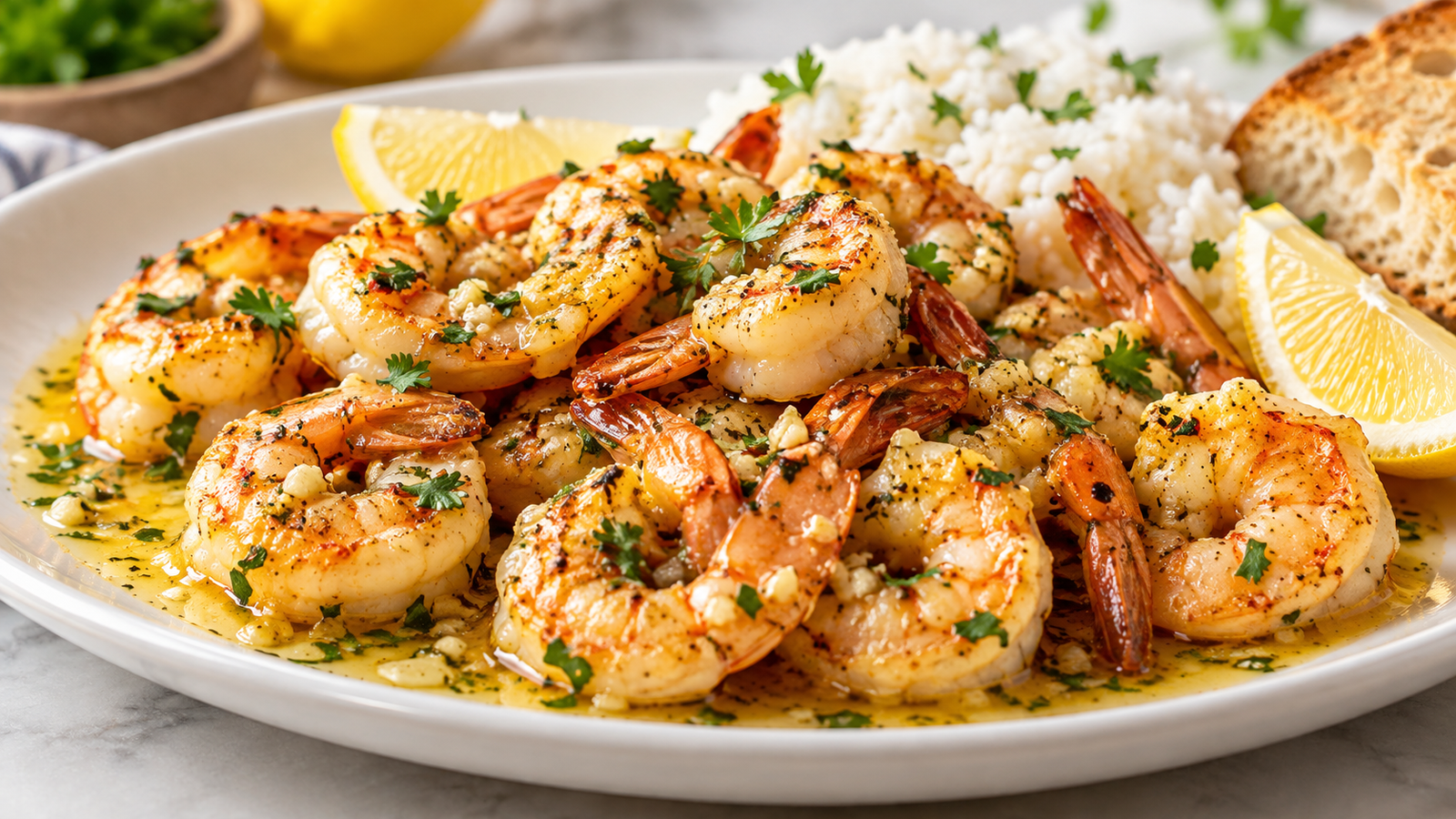
Easy Garlic Butter Shrimp
Introduction
Garlic butter shrimp is one of the fastest ways to turn a handful of simple ingredients into a flavorful seafood meal. Shrimp cook quickly, which means the rich garlic butter sauce comes together in the same short amount of time, making this dish ideal when you want something satisfying without spending a long time in the kitchen.
The combination of butter, fresh garlic, and lemon juice creates a sauce that’s simple to make yet full of flavor, while a light sprinkle of paprika and fresh parsley rounds out the dish with color and freshness. Because the ingredient list is short and the technique is straightforward, this recipe is approachable even for those who haven’t cooked much seafood before.
This garlic butter shrimp recipe works well for a quick lunch or dinner, and it can easily be served on its own or paired with a starch like rice, pasta, or crusty bread. The key to success lies mainly in timing: shrimp cook in just a few minutes, so knowing exactly what to look for helps you avoid the most common issue with shrimp dishes — overcooking.
Below you’ll find a full walkthrough of the cooking process, along with guidance on doneness cues, common mistakes, and ways to adapt the recipe to different tastes.
Recipe Overview
| Detail | Information |
|---|---|
| Prep Time | 10 minutes |
| Cook Time | 8 minutes |
| Total Time | 18 minutes |
| Servings | 4 servings |
| Difficulty | Easy |
| Cuisine | American |
| Course | Main Course, Dinner |
Ingredients
- 1 1/2 pounds (680 g) large shrimp, peeled and deveined
- 3 tablespoons (43 g) butter
- 4 cloves fresh garlic, minced
- 1 tablespoon olive oil
- 2 tablespoons fresh lemon juice
- 1/2 teaspoon paprika
- 3/4 teaspoon salt, or to taste
- 1/4 teaspoon black pepper
- 2 tablespoons chopped fresh parsley
- 1/4 teaspoon red pepper flakes (optional)
- 1/2 teaspoon lemon zest (optional)
Equipment
- Large skillet
- Knife
- Cutting board
- Garlic press or knife
- Spatula or tongs
- Measuring cups and spoons
How to Make Easy Garlic Butter Shrimp
- Clean and prepare the shrimp. If using shrimp that isn’t already peeled and deveined, remove the shells and the dark vein running along the back. Rinse the shrimp briefly under cold water.
- Pat the shrimp dry. Use paper towels to thoroughly pat the shrimp dry on all sides. Removing excess moisture helps the shrimp sear properly instead of steaming in the pan.
- Season the shrimp. In a bowl, toss the shrimp with the paprika, salt, and black pepper until evenly coated.
- Heat the skillet. Add the olive oil to a large skillet and heat over medium-high heat until the oil shimmers slightly.
- Cook the shrimp. Add the shrimp to the skillet in a single layer, being careful not to overcrowd the pan. Cook for about 1–2 minutes per side, until the shrimp turn pink and slightly opaque. Remove the shrimp from the skillet and set aside.
- Add the garlic without burning it. Reduce the heat to medium and add the butter to the same skillet. Once melted, add the minced garlic and cook for about 30 seconds, stirring constantly, until fragrant. Watch closely, since garlic burns quickly and turns bitter if left too long.
- Create the garlic butter sauce. Add the red pepper flakes, if using, and stir to combine with the melted garlic butter.
- Add the lemon juice. Pour in the lemon juice and stir, scraping up any browned bits from the bottom of the skillet for extra flavor.
- Return the shrimp to the skillet. Add the cooked shrimp back into the skillet, tossing gently to coat each piece in the garlic butter sauce. Cook for another 1 minute, just until the shrimp are heated through.
- Finish with parsley. Remove the skillet from heat and stir in the chopped parsley and lemon zest, if using.
- Check for doneness. The shrimp should look opaque and pink throughout, with a firm but tender texture, not rubbery or tough.
- Serve immediately. Transfer the shrimp and sauce to a serving dish and enjoy right away while warm.
How to Tell When Shrimp Are Done
- Color change: Raw shrimp are grayish and translucent; properly cooked shrimp turn pink on the outside and opaque throughout.
- Shape: Shrimp curl slightly into a loose “C” shape when fully cooked. A shrimp curled into a tight “O” shape is often a sign of overcooking.
- Texture: Properly cooked shrimp should feel firm but still tender when pressed, not hard or rubbery.
- Internal temperature: For food safety, shrimp should reach an internal temperature of 120°F (49°C), which typically corresponds to the visual and textural cues above for shrimp of this size.
Because shrimp cook so quickly, it’s easy to go from perfectly done to overcooked in a short window, so keep a close eye during the final minute of cooking.
Tips for the Best Garlic Butter Shrimp
- Thaw shrimp properly: If using frozen shrimp, thaw them fully in the refrigerator or under cold running water before cooking for even results.
- Dry the shrimp well: Patting shrimp dry before seasoning helps them sear instead of steam, giving better texture and flavor.
- Avoid overcrowding the skillet: Cooking too many shrimp at once lowers the pan temperature and causes steaming rather than searing. Cook in batches if needed.
- Use medium-high heat: This allows the shrimp to cook quickly and develop light color without overcooking.
- Add garlic at the right time: Adding garlic after the shrimp are removed, rather than at the very start, helps prevent it from burning during the longer shrimp-cooking step.
- Serve right away: Garlic butter shrimp are best enjoyed immediately after cooking, while the sauce is warm and the shrimp are at their most tender.
Common Mistakes to Avoid
- Overcooking the shrimp: This is the most common issue and results in a tough, rubbery texture. Watch closely and remove the shrimp from heat as soon as they turn opaque.
- Using excessive heat: Very high heat can cause the outside of the shrimp to overcook before the inside is done.
- Burning the garlic: Garlic added too early or left in the pan too long can turn bitter and affect the flavor of the whole dish.
- Overcrowding the pan: Too many shrimp at once traps steam and prevents proper searing.
- Adding too much salt: Since butter already adds some saltiness, season gradually and taste before adding more.
- Using wet shrimp: Shrimp that aren’t patted dry won’t sear well and may release excess liquid into the pan.
Variations
- Spicy Garlic Butter Shrimp: Increase the red pepper flakes or add a dash of hot sauce for extra heat.
- Lemon Herb Shrimp: Add extra lemon zest along with herbs like thyme or basil for a brighter, herbaceous flavor.
- Garlic Butter Shrimp Pasta: Toss the finished shrimp and sauce with cooked pasta for a heartier meal.
- Garlic Butter Shrimp with Vegetables: Add vegetables like asparagus, zucchini, or bell peppers to the skillet before adding the shrimp back in.
- Creamy Garlic Shrimp: Stir in a splash of heavy cream after adding the lemon juice for a richer, creamier sauce.
- Cajun-Style Garlic Shrimp: Season the shrimp with Cajun seasoning in addition to or instead of the paprika for a bolder, spiced flavor.
Storage and Reheating
Store leftover garlic butter shrimp in an airtight container in the refrigerator for up to 2 days. Seafood is best enjoyed fresh, and its texture can decline with repeated reheating, so it’s best to reheat only the portion you plan to eat.
To reheat, warm the shrimp gently in a skillet over low heat for a few minutes, just until heated through, stirring occasionally. Avoid high heat or extended reheating, as this can make the shrimp rubbery. A microwave can also be used on a lower power setting in short intervals, though a skillet generally gives better results for texture.
Serving Suggestions
Garlic butter shrimp pairs well with:
- Steamed rice
- Pasta
- Crusty bread
- Roasted vegetables
- A fresh salad
- Mashed potatoes
- Lemon wedges for extra brightness
Frequently Asked Questions
Can I use frozen shrimp? Yes. Thaw the shrimp completely in the refrigerator or under cold running water, and pat them dry thoroughly before cooking.
Should shrimp be peeled before cooking? For this recipe, peeled and deveined shrimp are recommended, since they cook evenly and are easier to eat once coated in the garlic butter sauce.
How long does shrimp take to cook? Shrimp typically cook in about 2–3 minutes per side, depending on their size, and are done as soon as they turn pink and opaque.
How do I prevent shrimp from becoming rubbery? Cook shrimp just until they turn opaque and curl into a loose “C” shape, then remove them from heat promptly to avoid overcooking.
Can I make garlic butter shrimp with small shrimp? Yes, though smaller shrimp cook faster than large shrimp, so reduce the cooking time slightly and watch closely for doneness.
Can I add this shrimp to pasta? Yes, this shrimp and sauce combination works well tossed with cooked pasta, as mentioned in the variations section.
How long does cooked shrimp last in the refrigerator? Cooked shrimp can be stored in an airtight container in the refrigerator for up to 2 days.
Can garlic butter shrimp be frozen? Cooked shrimp can technically be frozen, but the texture may change slightly upon thawing and reheating, so refrigerating and eating within a couple of days is generally recommended for the best results.
Nutrition (Estimated, Per Serving)
This is an approximate estimate based on the ingredients listed and may vary depending on specific brands and portion sizes.
| Nutrient | Approximate Amount |
|---|---|
| Calories | 240 kcal |
| Protein | 27 g |
| Carbohydrates | 2 g |
| Fat | 14 g |
| Fiber | 0 g |
| Sodium | 620 mg |
Recipe Card
Easy Garlic Butter Shrimp
Juicy, tender shrimp cooked in a rich garlic butter sauce with lemon and fresh herbs, ready in under 20 minutes.
- Prep Time: 10 minutes
- Cook Time: 8 minutes
- Total Time: 18 minutes
- Servings: 4 servings
Ingredients
- 1 1/2 pounds (680 g) large shrimp, peeled and deveined
- 3 tablespoons (43 g) butter
- 4 cloves fresh garlic, minced
- 1 tablespoon olive oil
- 2 tablespoons fresh lemon juice
- 1/2 teaspoon paprika
- 3/4 teaspoon salt
- 1/4 teaspoon black pepper
- 2 tablespoons chopped fresh parsley
- 1/4 teaspoon red pepper flakes (optional)
- 1/2 teaspoon lemon zest (optional)
Instructions
- Pat the shrimp dry and toss with paprika, salt, and pepper.
- Sear the shrimp in hot olive oil for 1–2 minutes per side until pink and opaque; remove from the skillet.
- Melt the butter in the same skillet and cook the garlic for about 30 seconds until fragrant.
- Stir in red pepper flakes (if using) and lemon juice, scraping up any browned bits.
- Return the shrimp to the skillet and toss to coat in the sauce for about 1 minute.
- Remove from heat, stir in parsley and lemon zest, and serve immediately.
Notes Avoid overcrowding the skillet when searing the shrimp, and remove them from heat as soon as they turn opaque to prevent a rubbery texture.